Kitting Out a Multi-Court Pickleball Venue: Equipment Sourcing by Court Count
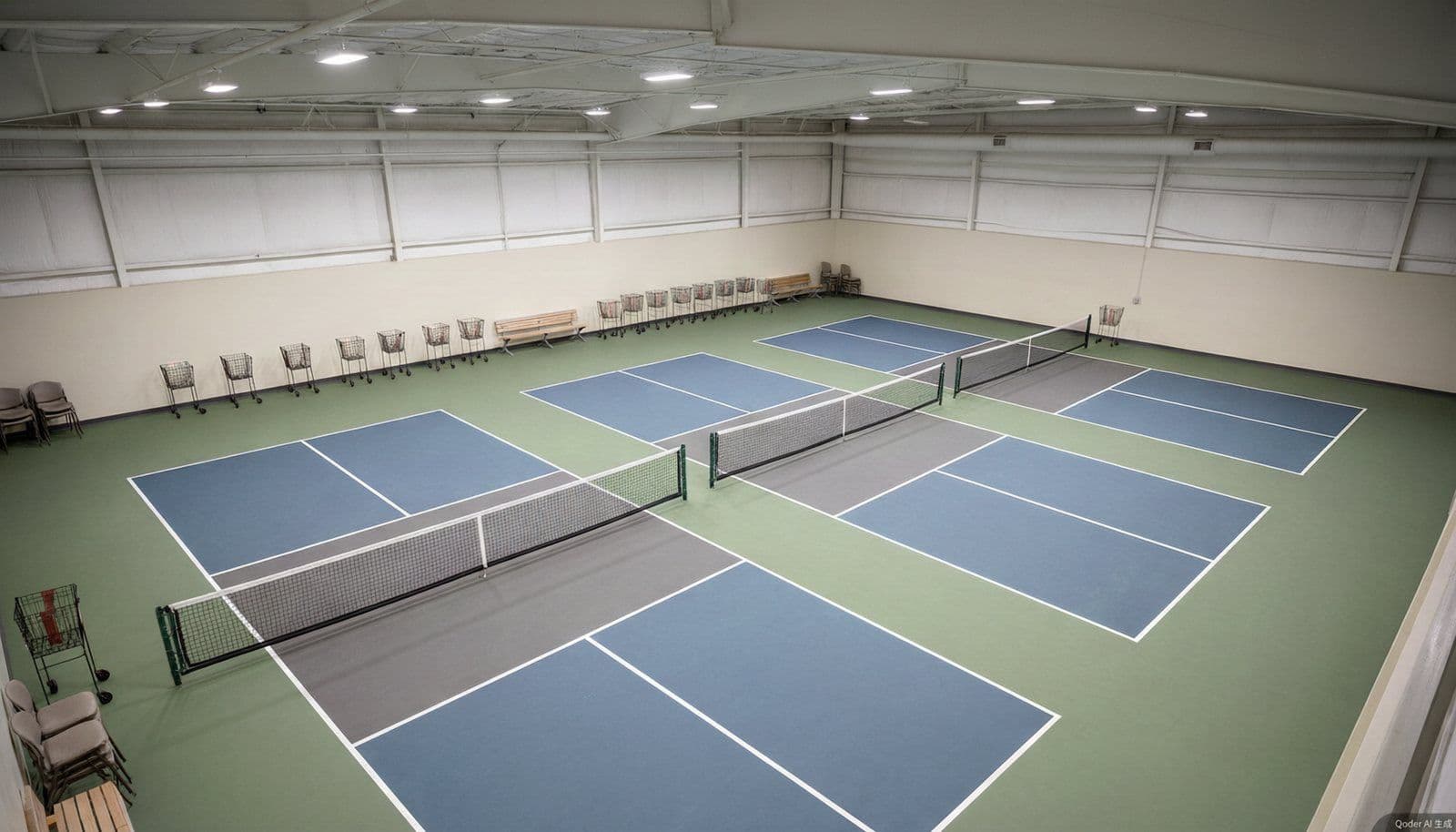
A four-court club and a sixteen-court venue buy the same categories of pickleball court equipment — nets, balls, rental paddles, carts, consumables. They are not solving the same problem. One is buying retail-friendly quantities with a credit card. The other is booking container space, planning replacement flows, and deciding which SKUs are worth importing at all. The moment court count crosses a threshold, equipment stops being a shopping list and becomes an operations model.
The numbers inside a real venue move faster than most first-time operators expect. One pattern this factory sees repeatedly in opening orders: a busy eight-court club can burn through 800+ balls in its first month of open play. That single consumption line outruns the opening purchase order most clubs write for balls. Scaling from four courts to sixteen courts is not multiplying an order by four. It is changing how the order is structured, financed, shipped, and repeated.

Key Takeaways
- Court count changes the purchasing structure. Based on typical venue operators, four-court clubs sit in dealer-friendly territory while venues around eight courts and up start to justify container-scale consolidated orders.
- Planning multipliers per court: nets at court count plus roughly 25% spares, 6–10 hundred-ball buckets of outdoor balls per court, and 8–12 rental paddles per court, adjusted for usage intensity.
- Consumption is best planned against court-hours, not calendar months. Busy open-play venues commonly plan ball replacement in a rough band of 0.5–1 ball per court-hour. Treat that as a planning assumption to rerun with your own usage data, not a measured constant.
- The factory-direct break-even is assumption-driven, not a published constant. With this factory's MOQ of 1,000 balls and 50 paddles, venues around 6–8 courts of steady utilization typically start to make container economics work for balls and paddles.
- A 40HQ container offers roughly 76 m³ nominal (about 65–68 CBM practical). Balls, paddles and nets load cube-efficiently; assembled carts and bulky frames are the first SKUs to buy domestically instead.
Court Count Changes The Sourcing Problem
Equipment consumption at a venue scales with court-hours, and court-hours do not grow linearly with court count. A four-court club running weekday evenings and weekend mornings might log 15–20 booked hours per court per week. A sixteen-court destination venue with leagues, lessons, and open play commonly books a larger share of the available clock. Its total consumption runs far beyond four times the four-court club's. Purchasing that treats the two as multiples of one order will underbuy the consumables and overbuy the durable goods.
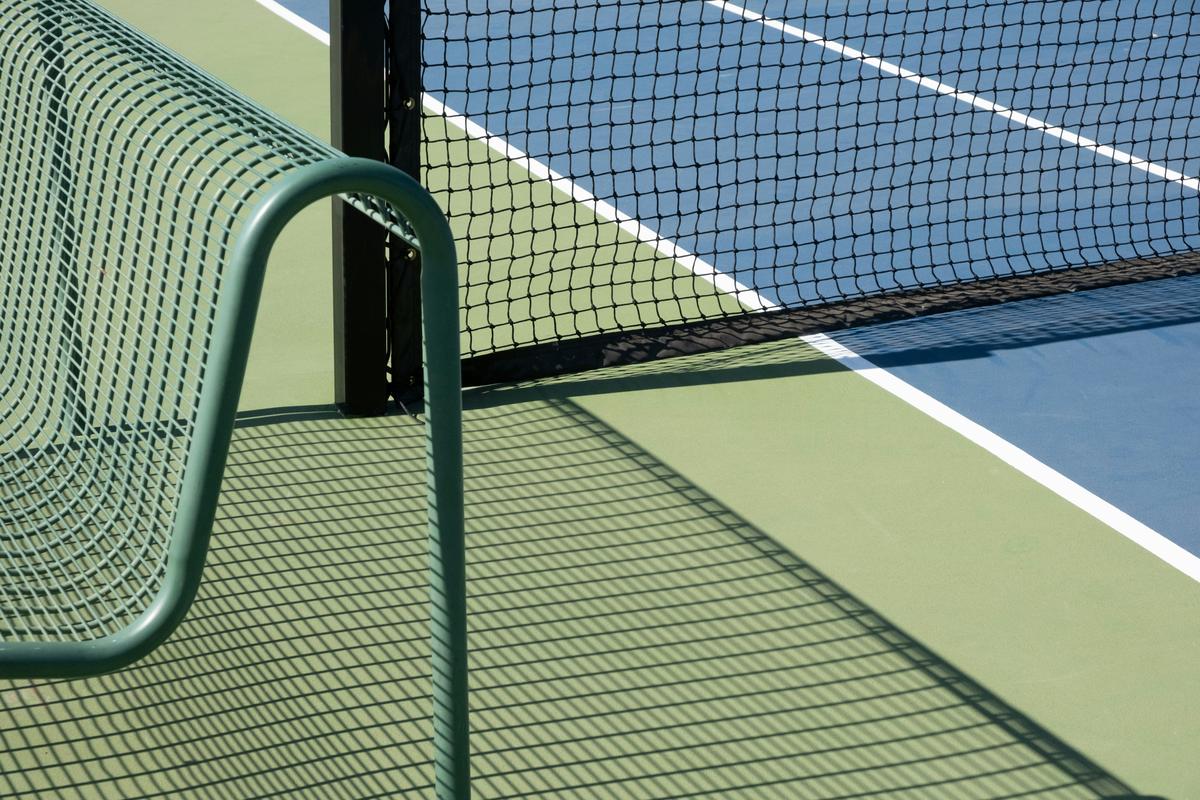
The shipping tier changes too. Below a certain volume, dealer and distributor purchasing wins on speed and small lots: no container commitment, no 90-day cash cycle, no customs paperwork. Above it, the economics flip toward consolidated factory orders. This factory has published one observation from facility opening orders. A 20-foot container roughly matches the mixed opening order of an eight-court facility. A 40-foot container fits a sixteen-court venue with headroom for consumable-heavy first-year stocking. Ocean transit from China to the US runs about 25–35 days from vessel departure. Production runs around 30 days. So the ordering window that makes consolidation work starts roughly 90 days before the equipment is needed.
Dead stock and stockouts are also asymmetric by category. Oversized rental paddle fleets tie up cash and gather dust in a storage rack, and the loss is quiet. Running out of balls on a Saturday stops revenue immediately and visibly. Typical venue operators therefore carry durable goods closer to actual need and give consumables a wider buffer. If your venue is still at the pre-opening stage, the starting point is the opening purchase-order worksheet in our pickleball facility opening kit guide. This article picks up where that one stops: the running venue, steady-state quantities, and the replacement flow.
Per Court Multipliers For Core Equipment
The table below is the per-court multiplier set this factory uses when a facility sends a first-order RFQ, published in full in the opening kit worksheet. The numbers assume moderate-to-heavy usage — busy open play mixed with clinics and rentals. Based on typical venue operators, reduce them 30–50% for a lightly used community facility and increase 20–40% for a competitive club running tournaments.
| SKU | Per court | 4-court venue | 16-court venue |
|---|---|---|---|
| Nets (portable or permanent) | 1 + spares (~25%) | 4 + 1 spare | 16 + 4 spares |
| Outdoor balls (100-ball buckets) | 6–10 buckets | 24–40 buckets | 96–160 buckets |
| Rental paddles (commercial grade) | 8–12 paddles | 32–48 | 128–192 |
| Ball hoppers / caddies | ~2 per court | 8 | 32 |
| Overgrips (12-month supply) | 24–36 per year | 96–144 | 384–576 |
Write The Rulebook Specs Into The PO
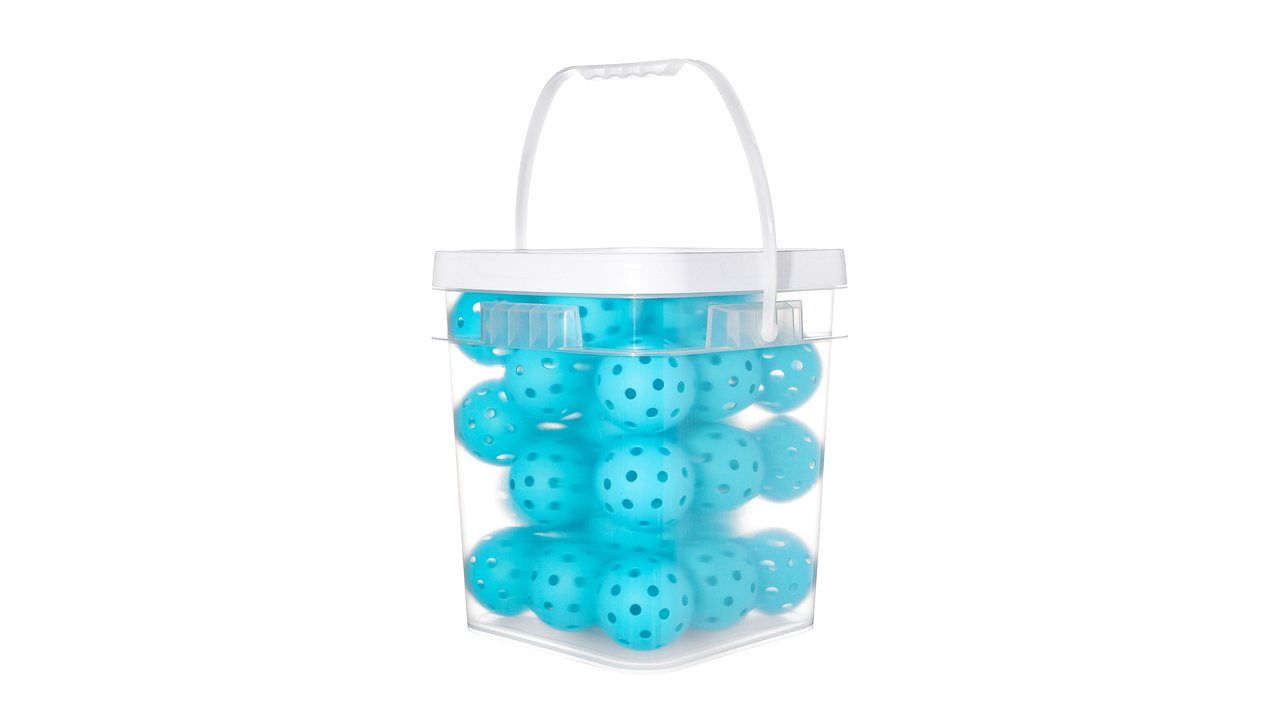
Quantities are half the purchase; acceptance criteria are the other half. The 2026 USA Pickleball Official Rulebook fixes the numbers a venue can hold a supplier against. The court rectangle is 20 ft x 44 ft for singles and doubles alike, measured to the outside edge of the perimeter and non-volley zone lines. Per the rulebook recommendation, the minimum total playing surface is 30 ft x 60 ft per court. Net height must be 36 inches (+/- 0.25 in) at the sidelines and 34 inches (+/- 0.25 in) at the centre — a tape measure settles disputes at setup. The full measurement procedure and the MUST-versus-SHOULD split in the rulebook are unpacked in the pickleball net height spec sheet.
Portable nets are the usual choice for venues converting multipurpose space. The frame geometry that survives repeated teardown matters more than the headline price. The wholesale portable net system guide covers what to spec. Spare parts deserve their own line on the PO: centre straps, headband tape, and replacement net fabric for one or two panels. A broken centre strap should retire a strap, not a court.
Replacement Cadence Per Thousand Court Hours
Calendar months are a poor unit for venue consumables because two venues with identical court counts can run wildly different hour loads. Court-hours are the honest unit. What follows is a planning model based on typical venue operators, with the assumptions shown so you can rerun it against your own booking data. It is not measured internal data, and it should not be quoted as anybody's guarantee.
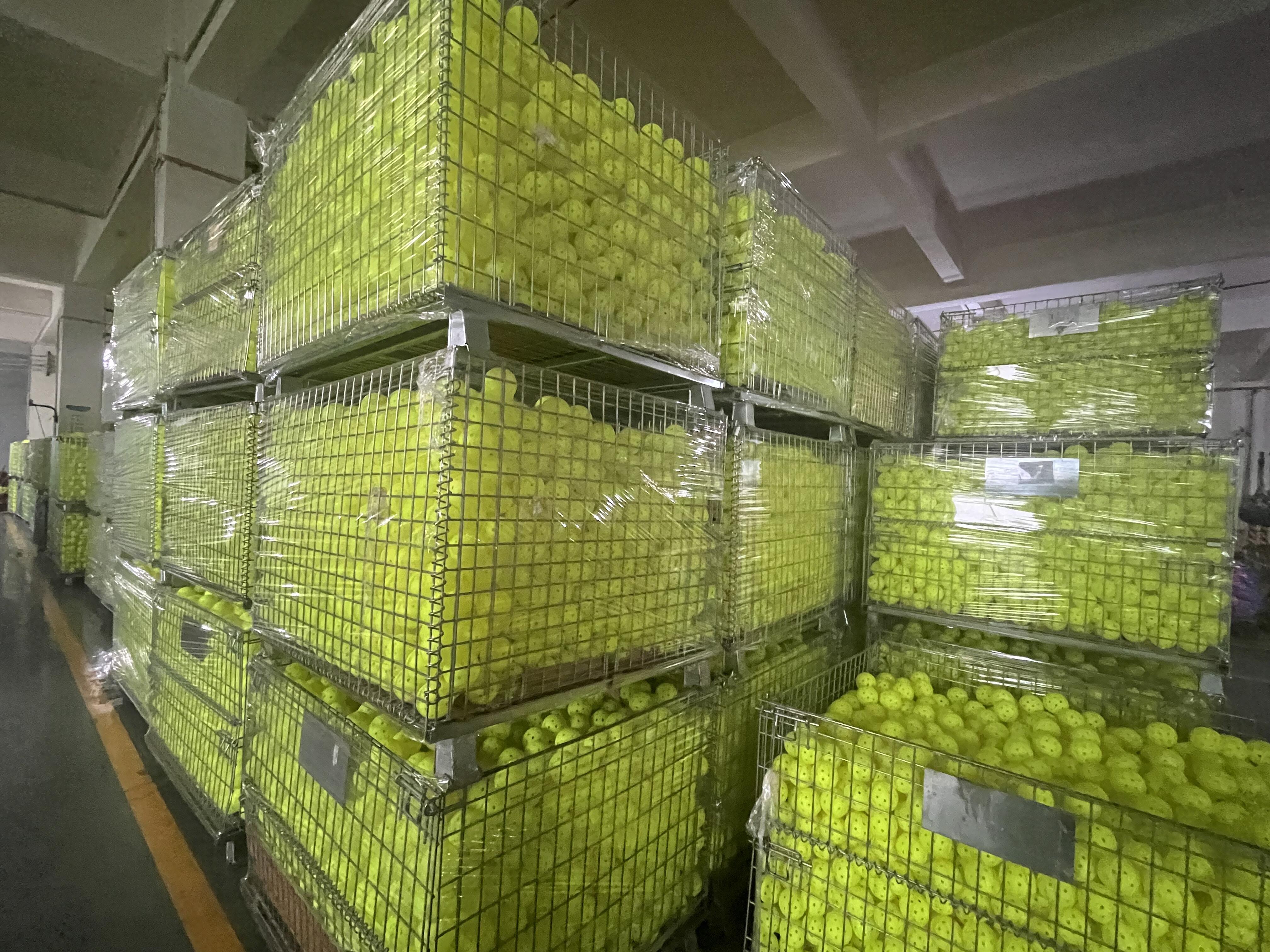
Start with balls, the fastest-moving line. Shared-use balls retire on feel: softening, bounce loss, cracks. Coaching-industry commentary commonly describes recreational ball life in the range of roughly 3–10 sessions per ball, with competitive drill use faster. Translated to venue planning: take a busy open-play court that logs around 25 hours a week and rotates shared balls conservatively. It will commonly consume on the order of 0.5–1 ball per court-hour. That is the band behind the first-month observation quoted above: 800+ balls at a busy eight-court club. It is also why ball reorders belong on a rhythm rather than an emergency basis.
| Item | Retirement trigger | Planning band (hedged) | Reorder rhythm |
|---|---|---|---|
| Shared-use outdoor balls | Bounce loss, softening, cracks | ~0.5–1 ball per court-hour | Monthly check, quarterly PO |
| Rental paddles | Edge damage, worn grip, face wear | Budget ~15–25% fleet turnover per year | Quarterly inspection |
| Overgrips | Visible wear at rental turnover | 24–36 per court per year | Fold into ball PO |
| Net spares (straps, tape) | Setup/teardown wear | Keep ~25% net count in spares | Twice a year |
Inspect Incoming Balls Against Published Specs
Replacement cadence only works if incoming balls are consistent. The USA Pickleball Equipment Standards Manual gives a venue checkable incoming-lot criteria. Diameter runs 2.87–2.97 inches, weight 0.78–0.935 oz, with 26–40 holes. Bounce must land between 30–34 inches from a 78-inch drop onto granite. The most useful field check is out-of-round variance, capped at +/- 0.020 inch. A cheap caliper across a handful of balls from each carton catches a bad lot before it reaches the courts.
Indoor and outdoor balls behave differently under shared use; the indoor vs outdoor ball guide covers which to stock when a venue runs both. For rental paddles, the triggers above are fleshed out in the rental paddle guide, including the commercial-grade specs that survive shared use.
When Factory Direct Beats Dealer Buying
A dealer price buys three things: availability in small lots, speed, and someone else's inventory risk. A factory-direct order buys lower unit cost, consolidated shipping, and branding options — in exchange for minimum order quantities, a longer cash cycle, and planning discipline. Neither channel is wrong; the question is where your court count puts you. The decision framework below is assumption-driven. Treat the output as a planning signal to rerun with your own dealer quotes and freight rates, not as a published price comparison.
| Assumption | Typical planning value (hedged) | Where it comes from |
|---|---|---|
| Factory MOQ | 1,000 balls / 50 paddles | This factory's published MOQ |
| Ordering window | 90+ days before need | Production ~30 days + ocean 25–35 days + QC |
| Dealer advantage | Small lots, fast delivery | Qualitative; margin varies by dealer |
| Indicative break-even | ~6–8 courts of steady utilization | Planning band; rerun with your quotes |
The mechanism is simple. A factory order adds fixed costs — ocean freight, duty, inspection, tied-up working capital — that a dealer order does not carry. Those fixed costs amortize against consumption. At four courts, annual ball consumption may sit near or below one 1,000-piece MOQ, so the container overhead has too little volume to amortize against and dealer purchasing usually wins. Around six to eight courts of steady utilization, annual ball and paddle consumption typically grows past the point where factory unit pricing absorbs the container overhead, and the balance shifts.
Consider how the arithmetic behaves at a mid-size venue. A 12-court venue booking 25 hours per court per week logs roughly 300 court-hours weekly, or about 15,600 a year. At the 0.5–1 ball planning band, that is on the order of 8,000–16,000 balls annually — eight to sixteen 1,000-piece MOQ lots. A single consolidated order covers months of consumption, and the freight and duty overhead amortizes across thousands of units rather than dozens of buckets. The same venue buying dealer buckets pays the unit premium on every reorder, and each reorder is a fresh cash decision.
The exposure to plan for is a late vessel. The buffer lot exists precisely so a two-week slip does not idle courts. Dealer purchasing still covers the gap lots, the trial SKUs, and the first season while real consumption data settles in. Rotation matters too: draw the oldest lot first so no bucket ages past its useful bounce.
Below the break-even, buy dealer for speed. Above it, a hybrid pattern works well for most venues: the container carries the predictable core — balls, paddles, nets, overgrips — while dealer purchases cover urgent gaps. The bucket economics matter too; the 36-pack bucket TCO analysis shows why the container holding the balls deserves the same scrutiny as the balls.
Container Cubic Planning By Category
Once an order goes factory-direct, cube decides which categories belong in it. The verified container facts, per carrier specifications: a 20GP dry container offers about 33 m³ nominal internal volume with roughly 25–28 CBM practical loading. A 40HQ offers about 76 m³ nominal with roughly 65–68 CBM practical. Payload limits matter as much as volume: a dense load can reach the container's weight limit with cubic space still empty.

| Category | Cube behavior | Import verdict (typical) |
|---|---|---|
| Balls (bucketed) | Stackable buckets, moderate density | Import — recurring line, MOQ 1,000 |
| Paddles | Dense, carton-efficient | Import — value per CBM is high |
| Nets (packed flat) | Flat-pack, manageable | Import with spare parts |
| Assembled carts / hoppers | Bulky, light, cube-hungry | Often smarter to buy domestically |
| Ball machines | Heavy, battery-regulated | Evaluate per unit value; see OEM guide |
The stop-importing rule of thumb: when a SKU's landed cost per CBM is dominated by freight rather than product value, stop importing it. Assembled ball carts and large framed racks are the usual offenders — they ship air and steel tube. Knocked-down designs change the math, so ask the factory for packed-flat dimensions before ruling anything out. The same cubic logic shapes the freight choice for smaller replenishment orders; the air vs sea freight comparison works through that split. For machine categories, the sourcing and compliance angles are covered in the ball machine OEM sourcing guide.
Box selection follows the same logic. Consolidators typically put heavy, dense loads into a 20GP because it reaches its weight limit first, and light, bulky loads into a 40HQ because it runs out of cube first. Worth asking your forwarder which limit your mix hits before booking.
Sourcing Tables For Four And Sixteen Courts
These steady-state tables put the pieces together for the two venue sizes this article is built around. They are planning tables based on typical venue operators, not price quotes: quantities and channel leaning, with the consumables budget shape a twelve-month view tends to produce.
| Line item | 4-court club (dealer-leaning) | 16-court venue (factory-leaning) |
|---|---|---|
| Ball channel | Dealer buckets, reorder as needed | Factory MOQ lots on a quarterly rhythm |
| Rental paddle channel | Dealer, 32–48 fleet | Factory spec'd fleet, 128–192 |
| Consumables budget shape | Balls dominate; grips minor | Balls dominate; paddles second line |
| Shipping pattern | Small parcel / LCL via dealer | Consolidated FCL, 90-day window |
| Spare-parts float | 1 net spare + straps | 4 net spares + full strap/tape kit |
Re-check the plan quarterly rather than annually. Count ball stock at a 90-day interval, divide the drawdown by booked court-hours for the same window, and compare the actual per-court-hour rate against the planning band. If it drifts noticeably, resize the reorder quantity rather than the buffer. Rental paddle fleet attrition, spare-parts usage and any shift in the weekly hour load — a new league night, a summer camp block — feed the same calculation. A venue that logs consumption from its first month reorders against its own data by the second order, and this table stops being the plan and becomes the sanity check.
Three sourcing mistakes show up often enough at venue scale to name them. First, under-ordering balls against a six-week reorder lead. The opening-order observation of a busy eight-court club burning 800+ balls in its first month is exactly how venues run dry during the membership window that matters most. Second, buying retail pack sizes for shared use, which pays retail unit economics on a consumable that belongs at MOQ lots of 1,000.
Third, single-supplier lock-in without an inspection standard: whatever the channel, write the out-of-round tolerance (+/- 0.020 inch) and the bounce range into the receiving checklist. Venues sourcing their steady-state kit at container volume can start from the facility-grade nets, balls and accessories catalog and spec each line against the tables above.
Conclusion
A venue that sizes equipment against court count, plans replacement against court-hours, and matches channel to volume has already avoided the three most expensive fitout mistakes. The remaining work is a checklist, not a debate.
- Confirm booked hours per court per week, then rerun the ball band (0.5–1 per court-hour) against your own schedule before setting the reorder quantity.
- Set the spare-parts float at roughly 25% of net count, and add the rulebook acceptance numbers — 36/34-inch net height, 20x44 ft court — to the receiving checklist.
- If utilization sits around six to eight courts or higher, request factory-direct pricing on balls and paddles against your dealer quote; below that, stay dealer and revisit annually.
- Pull bulky-light SKUs (assembled carts, large racks) out of the import list and source them domestically unless the factory packs them flat.
Venues that want the factory-direct numbers behind that last step can send the court count and hour load through the OEM conversation above. They can also browse the ready-to-spec equipment lines in the catalog linked in the sourcing table. The right order size is the one your consumption data supports, and that data starts accruing from day one of operation.
Frequently Asked Questions
How Many Pickleballs Should A Club Stock Per Court?
A common opening baseline is 6–10 hundred-ball buckets per court for moderate-to-heavy usage, per this factory's published facility worksheet. Light community use can run 30–50% lower; tournament-heavy clubs should add 20–40%. Restock against court-hours, not dates.
How Often Do Venues Replace Shared Use Balls?
Retire balls on bounce loss, softening, or cracks. Industry commentary puts recreational ball life around 3–10 sessions, faster under drill use. Busy venues commonly plan around 0.5–1 ball per court-hour and check stock monthly.
At How Many Courts Does Factory Direct Make Sense?
Around 6–8 courts of steady utilization for balls and paddles, as a hedged planning band against this factory's MOQ of 1,000 balls. Below that, dealer purchasing usually wins on cash cycle and storage. Rerun with your own quotes.
Which Venue Equipment Is Not Worth Importing?
Bulky, light SKUs — assembled ball carts, large racks, big framed items — typically burn more cube than their value justifies. Import dense categories (balls, paddles, flat-packed nets) and buy the bulky lines domestically unless they pack flat.
Do Clubs Need Approved Balls And Regulation Nets?
Sanctioned events require balls on the current USA Pickleball approved list. Nets must hold 36 inches at the sidelines and 34 at the centre (+/- 0.25 in) per the rulebook. Recreational venues can buy to the same specs at little extra cost.
Want to source this quality for your brand?
Contact our factory directly on WhatsApp for an instant MOQ and pricing quote.