Pickleball Facility Opening Equipment Kit: What to Source Before Day One
Opening a pickleball facility looks like a construction project — courts, surfaces, HVAC, lighting — until you sit down to write the equipment purchase order. Then it turns into a supply-chain problem. Ten distinct SKU categories, four different MOQs, three suppliers on three continents, freight lead times that don't line up with your grand opening date, and a nagging suspicion that whatever you order now, you'll be reordering the wrong quantity within a quarter. Most first-time facility operators discover this in the last four weeks before opening, which is exactly when it's too late to fix cheaply.
This is the equipment-side sourcing framework for opening a pickleball facility — from a modest 4-court community center to a 16-court destination club — written from a factory's perspective. It covers what to buy, how much of each SKU per court, which items to consolidate on a single container, where the lead-time bottleneck actually lives, and the mistakes that force emergency reorders in month two. We supply equipment to opening facilities every quarter, so the quantity math and consolidation logic below are the ones we use on real POs, not theoretical planning.
Key Takeaways
- A pickleball facility opening PO covers 8 core SKU categories — nets, balls, paddles, hoppers/caddies, court accessories, storage/carrying, member-facing branded gifts, and consumables — and getting the quantity math right per court beats getting the unit price right on any one category.
- Per court, plan roughly 1 net (portable or permanent), 6–10 buckets of outdoor balls per opening month, 8–12 rental paddles if you're offering rentals, 2 ball hoppers or caddies, plus consumables at ~1 replacement grip per 6 months of active use.
- Consolidating on one 20- or 40-foot container from a single factory is usually 30–50% cheaper landed than sourcing each SKU from a US distributor, but only if you time the order 90+ days before opening — inside that window, air freight and local resupply dominate the equation.
- Rental paddles need a durability spec, not a retail spec — commercial-grade honeycomb cores and reinforced edge guards last 3–5× longer in fleet use than retail-tier paddles at nearly identical wholesale prices.
- Member-facing branded items (starter kits, welcome-gift pickleballs, retail-shop SKUs) run on their own MOQ tied to logo printing and packaging — don't roll them into the equipment PO on day one; delay until you know real membership numbers.
- Chinese New Year and Q3 peak-season freight congestion are the two calendar events that ruin facility opening timelines — every 90-day-out plan needs to check which window it lands in and pull forward accordingly.
Step 1: Size the facility, then size the order
The single number that drives everything is court count. A 4-court community facility, an 8-court dedicated club, and a 16-court destination venue don't just multiply quantities — they cross thresholds where the sourcing strategy itself changes.
| Facility size | Sourcing shape | Typical opening PO value (equipment only, FOB) |
|---|---|---|
| 4-court community / rec-center | Half-container consolidation or US distributor; MOQ negotiations on paddles/balls | $8,000–$15,000 |
| 8-court dedicated club | Full 20-foot container from a single factory | $18,000–$32,000 |
| 16-court destination venue | 40-foot container + separate consumables reorder cadence | $40,000–$75,000 |
Below the 4-court line, sourcing from a US distributor is usually correct — the freight savings from consolidation don't overcome the smaller quantities and the risk of overbuying. Above the 8-court line, direct-factory single-container sourcing is nearly always the right call. The 4-to-8-court band is where operators overpay most often: too big for a distributor to give real wholesale pricing, too small to fill a container on your own.
Step 2: The 8 SKU categories and what to spec in each
Every pickleball facility PO has the same eight categories. The mix within each shifts by facility type, but if a category is missing entirely, the opening plan is incomplete.
1. Nets
One net per court, plus one spare net cloth per four nets for the first year. If the courts are permanent single-use pickleball, spec sleeved permanent posts with removable posts for maintenance access. Multi-use courts (tennis lines, basketball lines, or seasonal reconfiguration) need portable nets — 20–30 pounds of powder-coated steel that a staff member can move in under two minutes. Regulation dimensions per the USA Pickleball Official Rulebook are 22-foot minimum length, 36 inches at the posts, 34 inches at the center; the center strap is what enforces the 2-inch drop. The full portable-vs-permanent decision framework and MOQ math is in our guide to wholesale pickleball nets.
2. Balls (outdoor + tournament + demo)
Outdoor balls are the biggest volume item on the PO because they wear. Plan 6–10 buckets of 100 outdoor balls per court per opening month — clubs seeing serious play run through 40+ balls per court per week. Add 1–2 buckets per court of USA Pickleball approved tournament-grade balls for higher-level play. If the facility has indoor space, layer in 2 buckets of 26-hole indoor balls per court. Bulk unbranded outdoor balls land at a fraction of retail per ball; the packaging, drilling quality, and rebound consistency are what separate a stock ball from a serviceable club ball — the spec detail is in wholesale pickleball balls and the ball-type decision in indoor vs outdoor pickleball balls.
3. Paddles (rental fleet + demo + retail if applicable)
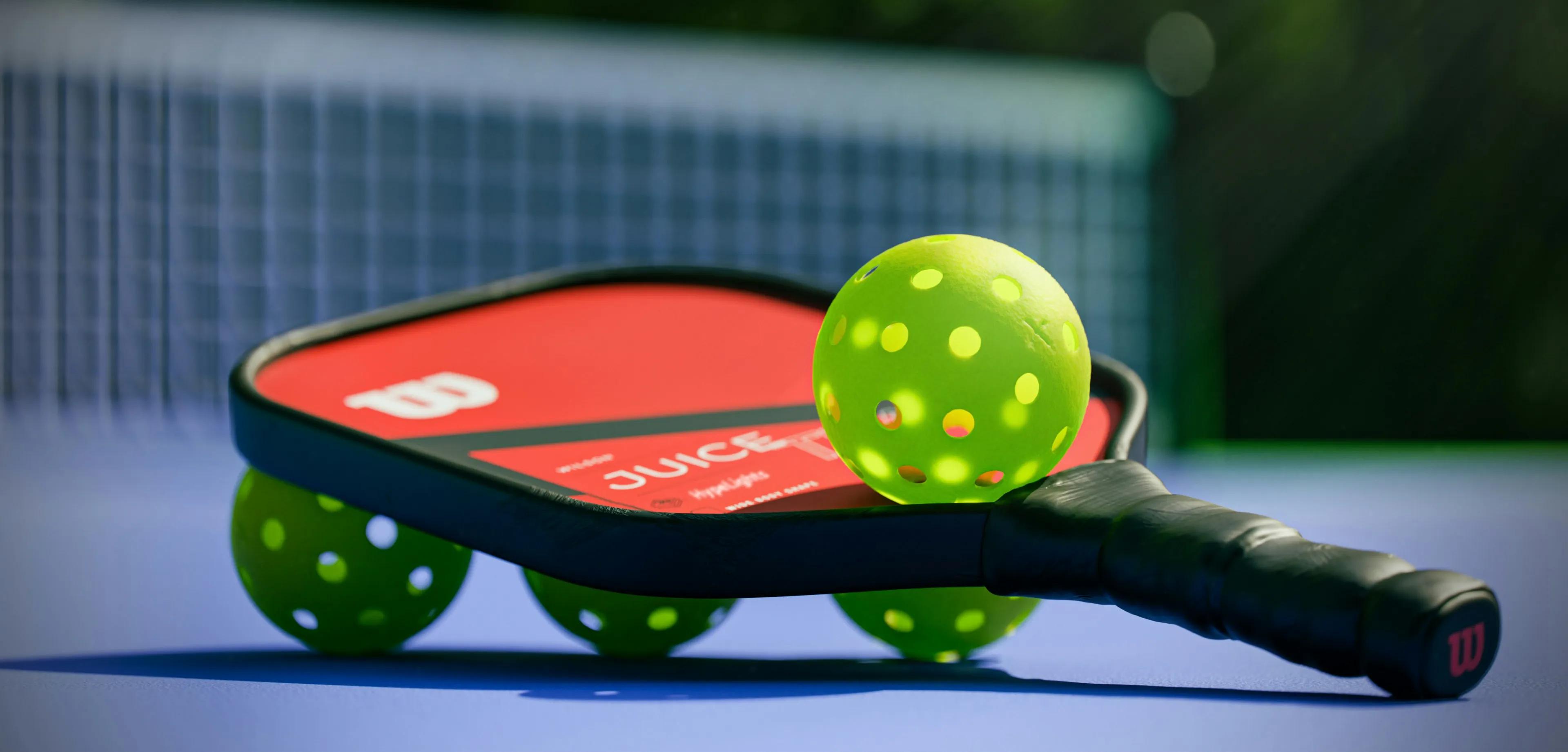
If the facility offers rentals, plan 8–12 rental paddles per court — enough to serve open-play sessions plus a rotation of paddles being replaced or repaired. Rental paddles are a different spec than retail paddles: cell-density honeycomb cores, thicker face laminates, and edge guards designed to survive drop tests rather than to look premium. Retail-tier paddles used as rentals fail at 3–5× the rate at nearly identical wholesale prices; the discipline is in our guide to pickleball rental paddles. If the facility runs a demo program, add 2–4 premium paddles per court in the price range the facility will retail, so members can try before buying — the demo fleet drives retail revenue and needs a real turnover budget.
4. Ball hoppers and caddies
A hopper or wheeled caddy moves balls from storage to court and back — sounds trivial, is actually one of the most-used pieces of equipment in the building. Plan 2 hoppers or caddies per court for open-play facilities, higher for clinic-heavy operations. Frame welds, wheel bearings, and lid hinges are the failure points; a cheap wheeled caddy fails at the axle within a season of heavy use. Steel frame with powder coat and pneumatic or solid PU wheels is the durable spec.
5. Court accessories (line tape, wind screens, dividers, portable court kits)
Court-line tape for temporary court setups on gym floors or tennis courts. Wind screens on outdoor perimeter fencing (buy the screen once, upsized to the fence height). Divider netting between courts if the facility is high-density (16-foot mesh drops between courts eliminate cross-court ball migration). For roving instructors or satellite programs, a portable court kit (four corner cones + tape + a portable net + a hopper) is a category on its own. Quantities scale with facility layout more than court count.
6. Storage and carrying (paddle covers, gym bags, storage racks)
Storage-side infrastructure the members don't see but the staff use daily: paddle covers for the rental fleet (protects grips and edge guards from shelf abrasion), gym bags for staff moving equipment between courts and storage, wall-mounted paddle racks near each court cluster. Under-invested in on every first-time opening PO; the cost of a spec-appropriate cover is measured in cents while the paddle it protects is measured in dollars.
7. Consumables (overgrips, replacement grips, net-fabric spares, ball repackaging)
The category most often forgotten on opening day. Overgrips wear out on rental paddles every 4–8 weeks of active use; plan 3 replacement overgrips per rental paddle for the first six months. Replacement full grips are longer-cycle (roughly 6 months per paddle). Net-cloth spares are 1 per 4 nets minimum. Ball repackaging materials (retail-facing tubes or sleeves) if the facility resells balls at a pro shop. Consumables are cheap per unit and expensive per emergency reorder — order 12 months' worth in the opening PO.
8. Member-facing branded items (starter kits, welcome gifts, retail-shop SKUs)
Custom-branded pickleballs, paddle covers, gym towels, member starter kits. This category is where opening operators overspend on day one — buying 5,000 branded starter kits when 1,500 members will materialize. Branded items also run on their own MOQ tied to logo printing and packaging: adding your logo to a pickleball has a small setup fee and prints from 500 pieces, but a fully packaged branded starter kit with paddle + balls + branded box may need 500+ complete kits to be economical. See custom logo pickleballs for the printing-side math. Delay this SKU category out of the opening PO if member numbers are still uncertain; reorder in month three when real demand data exists.
Quantity math per court — the sourcing worksheet
Here is the quantity framework we use when a facility sends us a first-order RFQ. The numbers below assume moderate-to-heavy usage — busy open-play mixed with clinics and rentals. Reduce 30–50% for a lightly-used community facility; increase 20–40% for a competitive club running tournaments.
| SKU | 4-court | 8-court | 16-court |
|---|---|---|---|
| Nets (portable or permanent) | 4 + 1 spare | 8 + 2 spare | 16 + 4 spare |
| Outdoor balls (100-ball buckets) | 24–40 buckets | 48–80 buckets | 96–160 buckets |
| Rental paddles (commercial-grade) | 32–48 | 64–96 | 128–192 |
| Ball hoppers / caddies | 8 | 16 | 32 |
| Overgrips (opening supply, 12 mo) | 96–144 | 192–288 | 384–576 |
| Wind screens (per 100 ft outdoor fencing) | 2–4 sections | 4–8 sections | Perimeter, sized to layout |
The outdoor-ball quantity is the number first-time operators most consistently underorder. A serious 8-court club will run through 800+ balls in the first month; if the opening PO carried 30 buckets and the reorder is 6 weeks out, the facility runs balls short during the honeymoon-membership window when player experience matters most.
The consolidation math: one container beats twelve small shipments
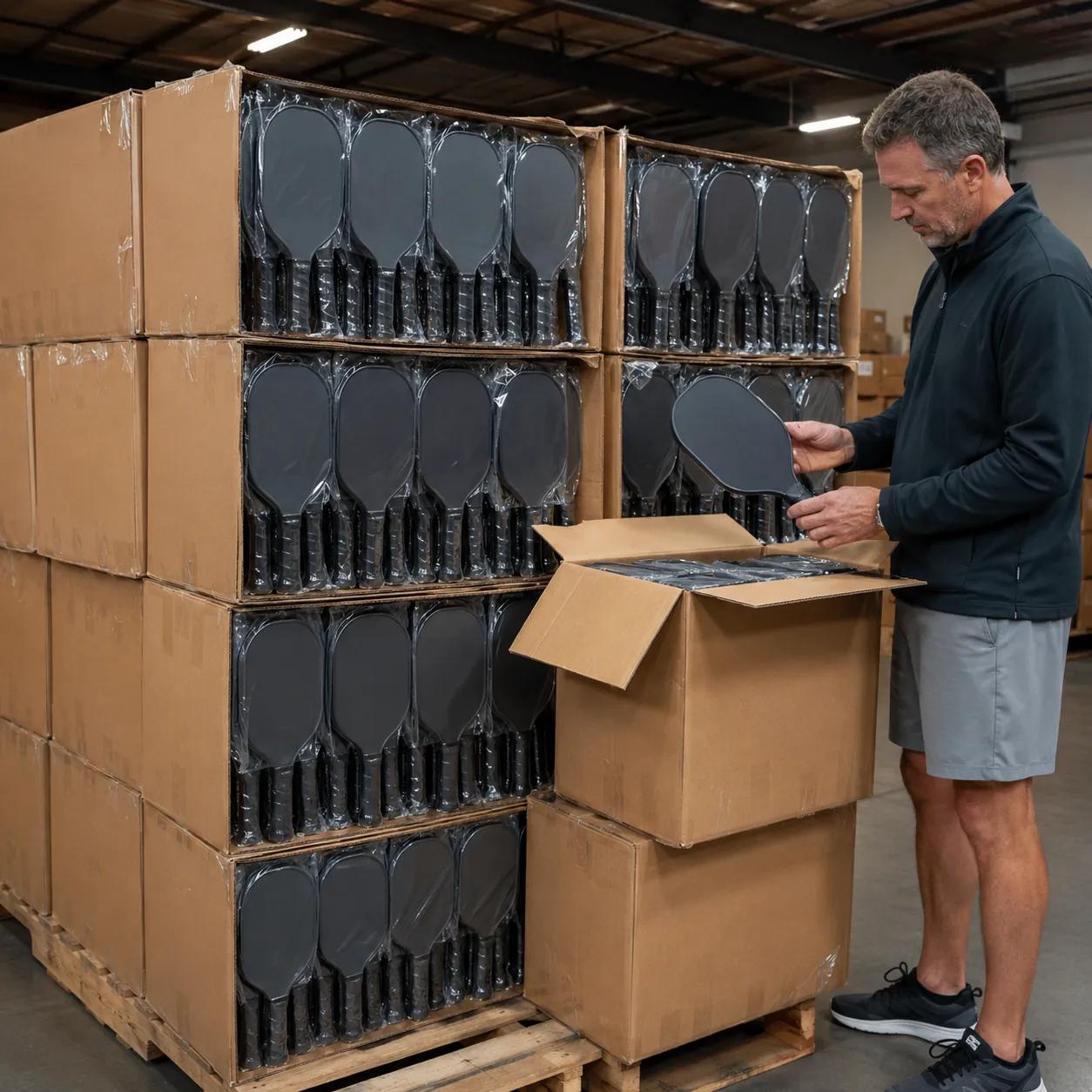
The single decision that most changes total landed cost is whether the facility's opening order ships as one consolidated container from one source factory, or is bought piecemeal from multiple US distributors. For 8-court-and-larger facilities, consolidation is nearly always cheaper — with three preconditions.
- Order 90+ days before opening. Sea freight to the US is 25–35 days from vessel departure; production is 30 days; QC and consolidation add a week. Inside a 60-day window, air freight is unavoidable for portions of the order, which erases the container savings.
- Order from a factory that produces multiple SKU categories. A ball factory can consolidate nets, hoppers, and accessories from partner suppliers into one container; a paddle-only supplier can't. Ask up front whether the factory handles cross-SKU consolidation or refers you to a freight forwarder to do it. Understand your Incoterms 2020 — FOB, CIF, or DDP each shift where responsibility for freight and duty lands.
- Check the calendar. Chinese New Year (February 6, 2027) and Q3 peak-season congestion (August–October) both shift the timeline dramatically. Ordering into a CNY blackout adds six weeks to the practical lead time; ordering into Q3 peak adds two weeks of freight-rate volatility and rolled-container risk. The full calendar is in pickleball sourcing calendar.
A 20-foot container of pickleball equipment holds roughly the mixed opening PO of an 8-court facility with modest branded-goods overlay. A 40-foot container fits a 16-court destination facility with headroom for consumable-heavy first-year stocking.
Best for / not for: is a consolidated opening PO the right approach?
| Best for | Not ideal for |
|---|---|
| 8-court and up, 90+ days out from opening | Under 4 courts — the freight savings won't overcome minimum-order complexity |
| Facilities with a clear opening date and stable court count | Facilities still in construction with an uncertain opening date; equipment sits in a warehouse costing storage |
| Operators comfortable with 30% deposit on a first-time-supplier order | Operators needing net-30 or consignment terms — Chinese factories rarely accommodate |
| Facilities that expect steady equipment reorders (a real supplier relationship pays off) | One-and-done municipal court projects where reorder is not planned |
What we check before shipping a facility opening order
Facility POs go wrong differently than retail POs — the failure mode isn't a returns rate, it's a missing SKU at opening. The pre-shipment discipline we run on facility orders has picked up specific patterns.
- Complete SKU count vs the PO. Every quantity gets independently counted, not carton-verified. Missing 40 rental paddles arriving on opening day is fatal; missing 40 balls is inconvenient but recoverable.
- Regulation dimensions on all nets. 36-inch post height, 34-inch center, center strap present and functional. A club that opens with an out-of-spec net loses the "regulation-legal facility" positioning immediately.
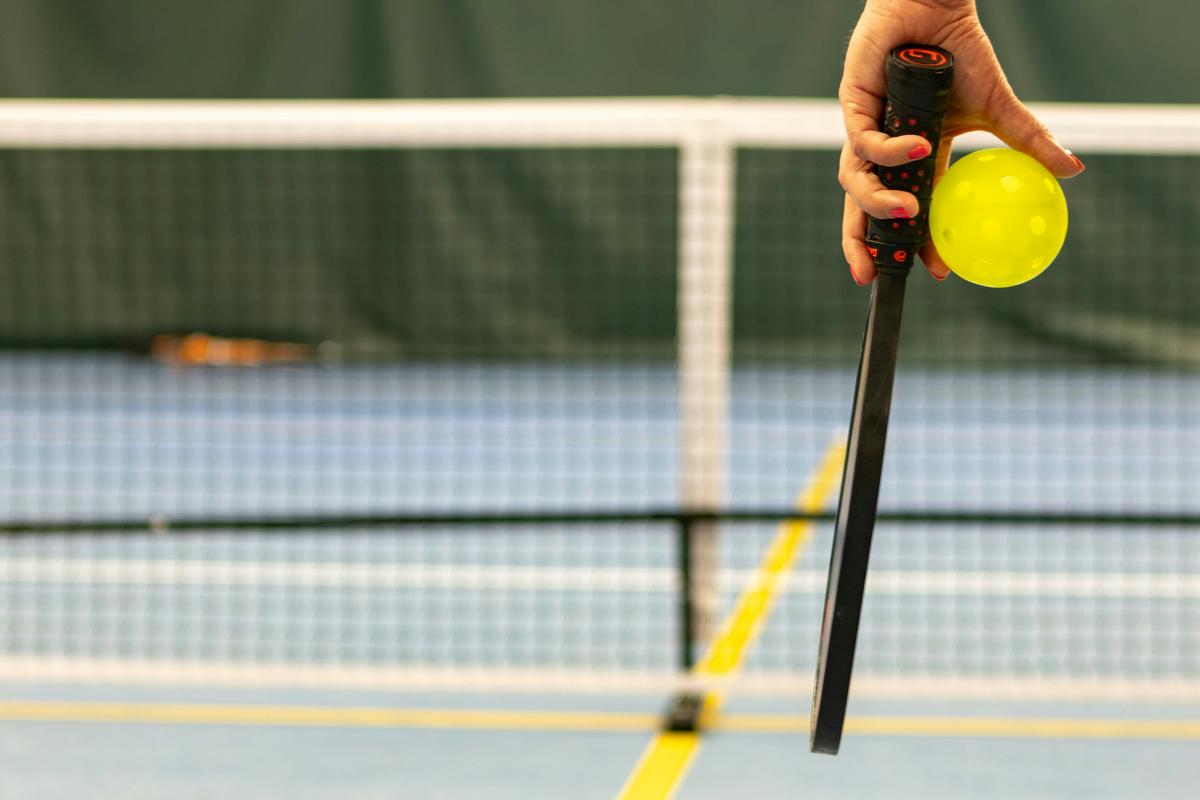
- Bounce and weight sample on every ball batch. Roundness within ±0.1 inch, weight in the 24.3–26.2 g outdoor window per USA Pickleball ball specifications, bounce test from 78-inch drop. Facility balls that scatter on bounce make coaches complain to management within a week.
- Rental-paddle grip fit and consistency. Grip circumference tolerance ±0.05 inch across the batch. Members with different hand sizes need paddles that don't vary randomly.
- Carton labelling and packing list matching. Every carton labelled to a specific SKU, packing list matches the manifest, no consolidated cartons that force the facility to unpack twelve cartons to find one net.
Real scenario: a 6-court community facility's 90-day opening plan
Here is an illustrative walkthrough of a mid-size opening PO run against the sourcing calendar — the shape most first-time facility operators run in reality.
- Day 0 (90 days pre-opening) — RFQ sent. Court count, opening date, and any known branded-goods interest go to two or three shortlisted factories. Include: 6 nets + 2 spares (portable), 60 buckets of outdoor balls, 60 rental paddles, 12 ball hoppers, wind-screen sections for perimeter fencing, 12 months' consumables. Ask for MOQ, unit price, container consolidation ability, and a real production lead time.
- Day 10 — supplier chosen, sample sign-off begins. Golden-sample cycle on the rental paddle spec and ball spec — see golden-sample approval. Deposit paid on approved samples; production slots into the factory queue.
- Day 20–55 — production runs. Factory produces paddles and balls in parallel; nets and accessories are queued from partner suppliers into the consolidation warehouse. Payment terms usually 30% deposit / 70% before shipment — the discipline for this is in OEM payment terms and trade assurance.
- Day 55–60 — pre-shipment QC. The complete PO gets audited SKU-by-SKU against the packing list. Rejections happen at this stage, not after arrival; expect a small punch list on the first order.
- Day 60 — container sails. 20-foot container leaves origin port. Balance payment on documents against sailing.
- Day 60–85 — sea transit + customs. Sea leg to US port takes 25–30 days; customs clearance and inland movement adds 5–7 days. Track vessel position; watch for peak-season rolls if the sailing lands in September.
- Day 85–90 — unpacking and staging. Container arrives at facility with 5 days of buffer before soft-open. Staff unpacks against the packing list, stages rental paddles at each court cluster, fills hoppers with outdoor balls, installs nets. First-day member walk-throughs run against a functional facility, not a construction site.
Common opening-PO mistakes we see
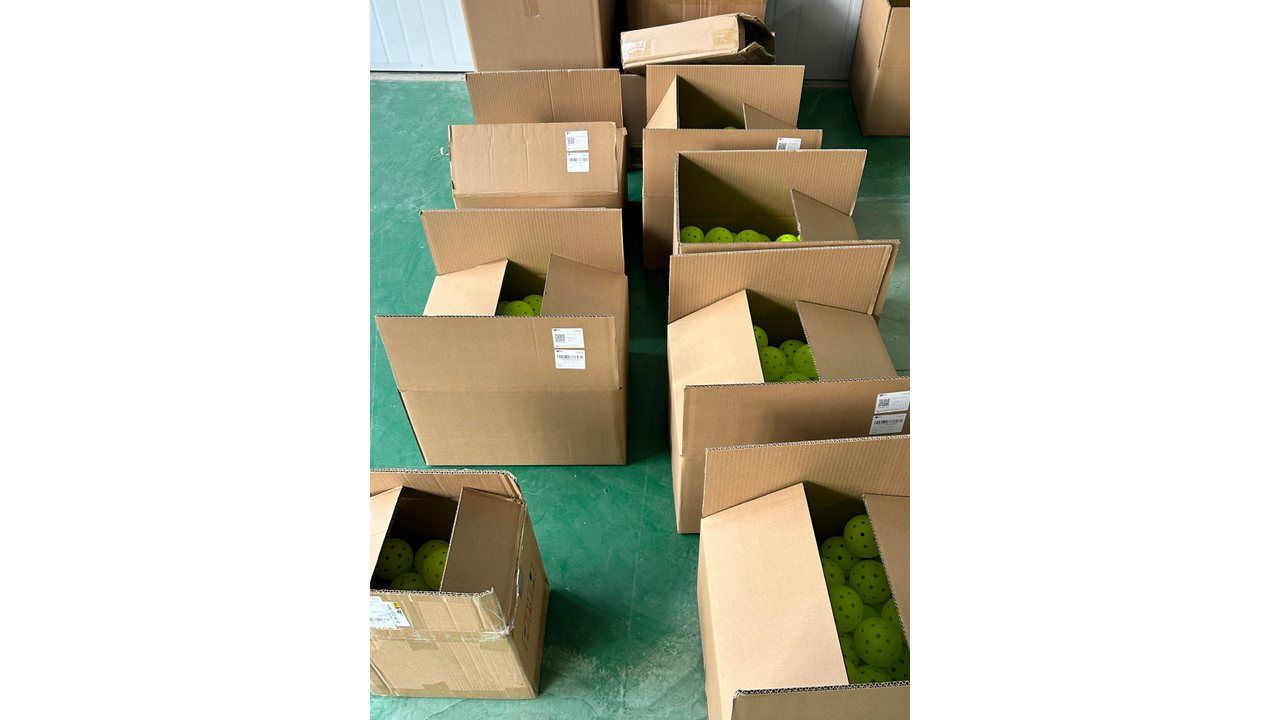
- Under-ordering outdoor balls. The single most common miss and the fastest way to surprise a first-time operator with a hidden cost. A busy 8-court club will run through 800+ balls in the first month; the opening PO carrying only 30 buckets forces an emergency air-freight reorder at 3× normal cost — and if the reorder is late, member complaints and refund requests are the returns you didn't budget for.
- Spec'ing retail paddles for the rental fleet. Retail paddles are optimized for feel and price-per-unit at low volumes; they fail 3–5× faster than commercial-grade rentals under fleet use. Facilities that discovered this the hard way ended up with a defect-driven returns queue, a member-complaint log, and a wholesale reorder they hadn't planned. The wholesale cost differential is small compared with replacement cadence.
- Ordering branded starter kits before member numbers stabilize. Buying 5,000 branded kits for a facility that fills at 1,500 members within year one is opening capital tied up in shelf inventory. Delay branded goods until month three, then reorder on real demand.
- Ignoring the Chinese New Year calendar. A facility opening in April that places its order in January is placing it into the CNY blackout window; the practical lead time doubles. Every opening plan needs to check what calendar event the production window overlaps with — the full picture is in pickleball sourcing calendar.
- Buying nets without spare cloth. The frame outlives the net cloth roughly 2:1. Facilities without spare cloth end up replacing whole nets for repairable failures, tripling long-term equipment cost — the hidden replacement bill that regret-fills the year-two budget. Spare-cloth stocking is a 5-cent-of-the-frame-cost decision that saves the full frame replacement later.
- Skipping the pre-shipment inspection. A first-time supplier and a first-time buyer both benefit from a third-party inspection on the opening PO. AQL sampling at 1.5 major / 2.5 minor under ISO 2859-1 is standard — the mechanics are in pre-shipment AQL inspection. For the agency comparison, see SGS vs QIMA vs V-Trust.
Frequently Asked Questions
How far in advance should I order equipment for a new pickleball facility?
Ninety days minimum for a consolidated container from a Chinese source factory: 30 days production, 25–35 days sea freight, 5–10 days customs and inland movement, plus buffer. Inside 60 days you're forced into air freight for portions of the order at 3× the normal per-unit freight cost. Add extra buffer if the production window overlaps Chinese New Year (Jan–Mar) or Q3 peak-season congestion (Aug–Oct).
How many outdoor balls should I stock per court for a facility opening?
Plan 6–10 buckets of 100 outdoor balls per court per opening month for moderate-to-heavy use. A busy 8-court club will run through 40+ balls per court per week during open-play. The opening PO should carry 3–6 months of expected consumption — the risk of running short during the honeymoon-membership window outweighs the storage cost of stocking generously.
Do rental paddles need to be a different spec than retail paddles?
Yes — commercial-grade rental paddles use denser honeycomb cores, thicker face laminates, and reinforced edge guards designed to survive drop tests and repeated impact. Retail-tier paddles used as rentals fail at 3–5× the rate at nearly identical wholesale prices. The wholesale-cost differential between the two grades is smaller than most operators expect; the replacement-cadence differential is much larger.
Should we consolidate the whole order onto one container or use a US distributor?
For 8-court-and-larger facilities with 90+ days to opening, direct-factory consolidation on one container is 30–50% cheaper landed than sourcing each SKU from US distributors. Below 4 courts, the US distributor path is usually correct — the freight savings don't overcome the smaller quantities. The 4–8 court band is a real trade-off; run the math both ways.
What's the typical payment structure for a facility opening order from a Chinese factory?
Standard is 30% deposit on PO confirmation, 70% before shipment against pre-shipment inspection sign-off. A first-time supplier may ask for 50% deposit on the opening order and revert to 30% on repeat orders. Net-30 or consignment terms are not standard from Chinese factories on first orders and shouldn't be assumed.
Do we need USA Pickleball approved balls for a facility?
Depends on the play mix. Sanctioned tournament play requires USA Pickleball approved balls; open-play doesn't legally require them but members who play tournaments elsewhere expect the ball to feel similar. Sports facility programming benchmarks published by the National Recreation and Park Association point to a mix strategy across most public-access facilities. Most clubs stock a mix: unbranded outdoor balls for open-play at low cost per ball, and USA Pickleball approved balls for tournament and clinic use. The certification specifics are in sourcing USA Pickleball approved balls.
How many overgrips should we stock for the opening PO?
Overgrips wear on rental paddles every 4–8 weeks of active use. For a 12-month opening supply, plan 3 replacement overgrips per rental paddle. Cheaper per unit and much cheaper per rush reorder than any other consumable — this is a category to order generously in the opening PO.
Want to source this quality for your brand?
Contact our factory directly on WhatsApp for an instant MOQ and pricing quote.