14mm vs 16mm Paddle Core: What It Costs a Brand to Spec Either
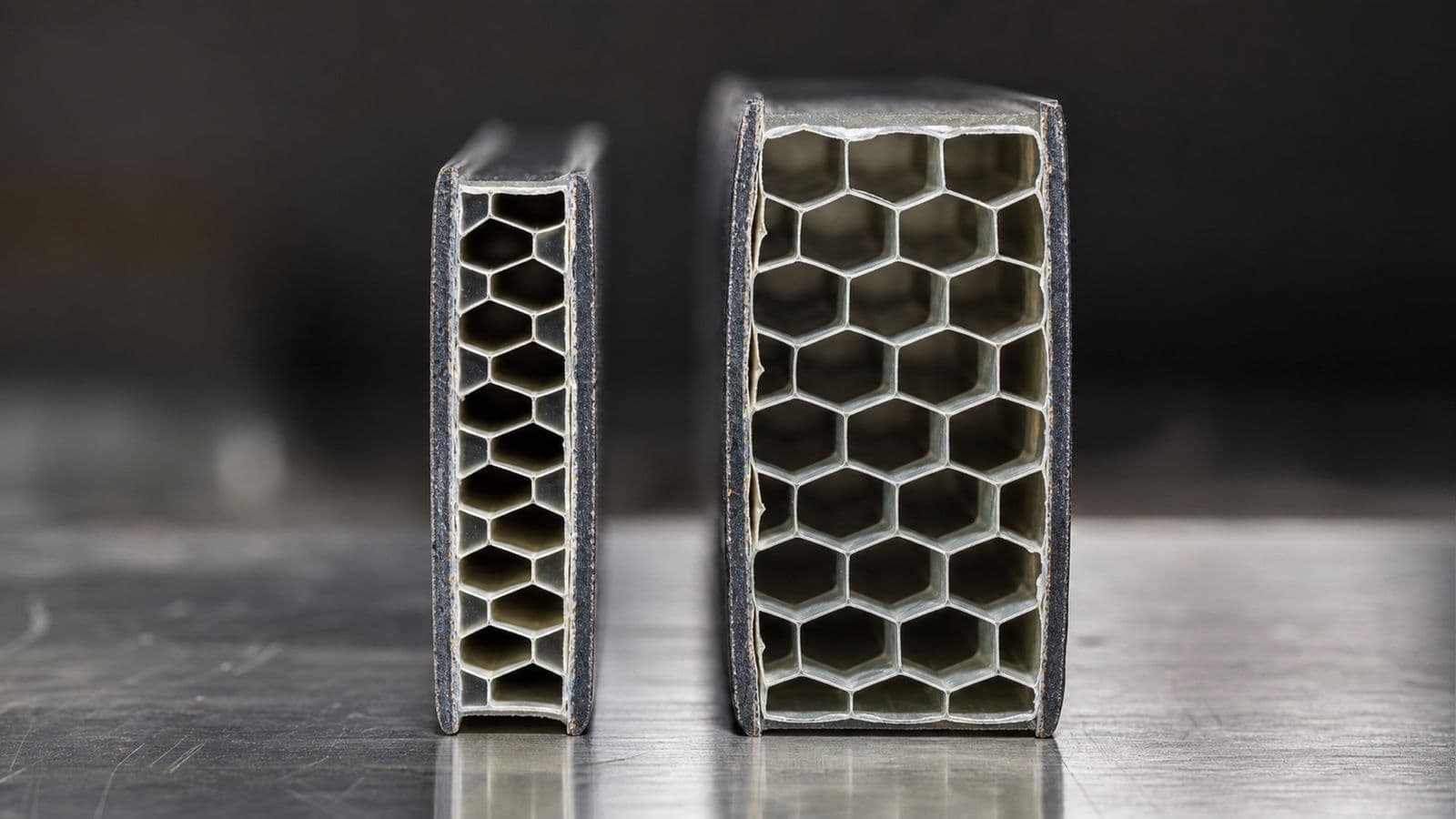
Search "14mm vs 16mm" and every result answers the same question: which one should you play with. That is a fine question. It is not the question a brand owner has to answer.
You are not choosing a paddle. You are choosing a build — and the choice propagates into your tooling, your certification budget, your inspection plan and the wording on your spec sheet. Before any of that, one sentence in the governing standard settles what most people assume is settled the other way.
Key takeaways for a brand owner
- No governing body limits core thickness. USA Pickleball's Equipment Standards Manual states it plainly: "There is no restriction on paddle thickness." Weight is unregulated too. This is a commercial decision, not a compliance one.
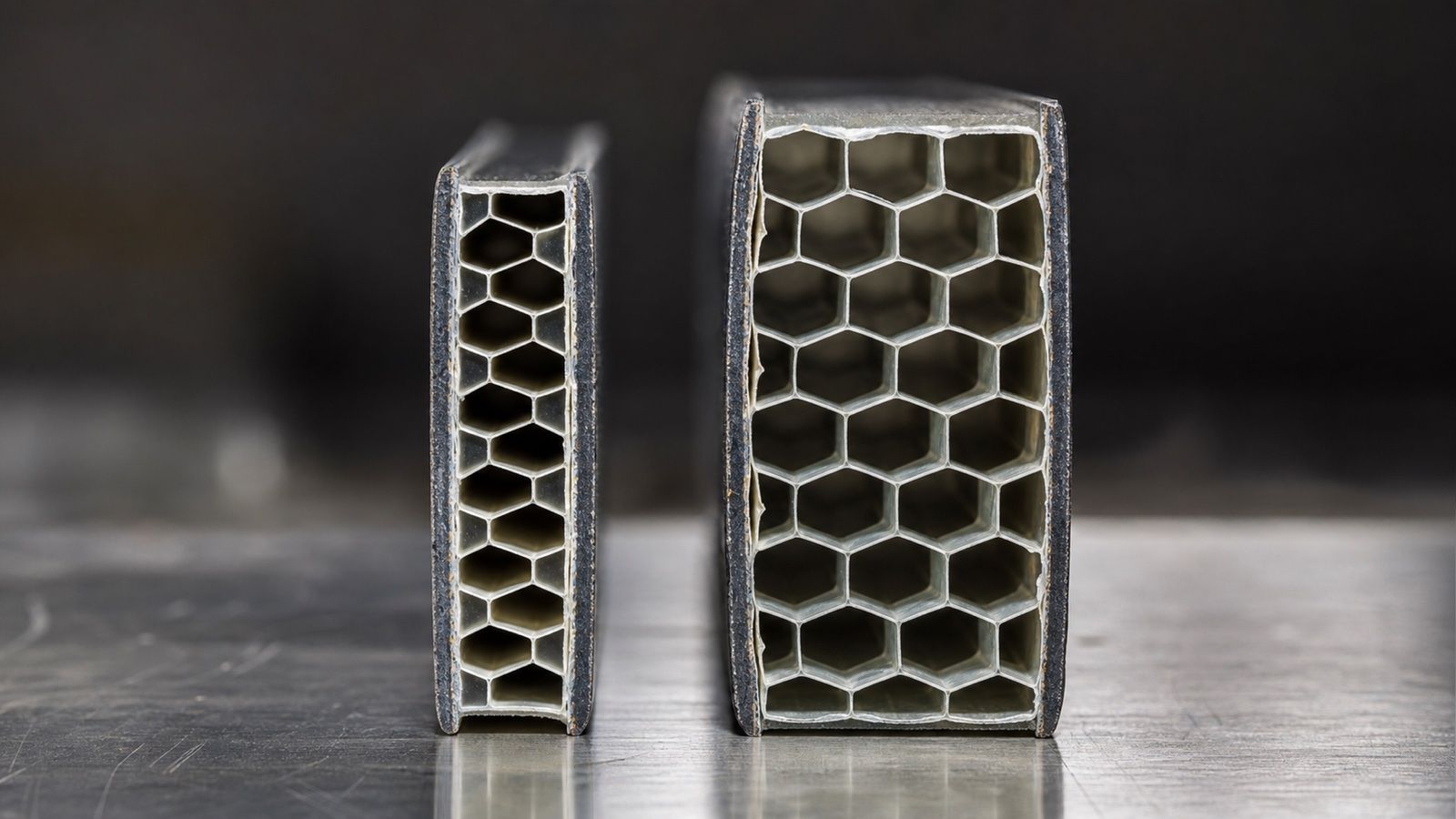
- Thickness is the biggest single lever on panel stiffness. In sandwich construction, bending stiffness scales with the square of the distance between the faces — which is why 2mm reads as a large change in feel.
- The threshold thickness moves you toward is a floor, not a ceiling. UPA-A requires an Average Deflection Force of 46 lb or more on both faces. Stiffer helps you here. The widely-repeated "USA Pickleball deflection limit" does not exist in that rulebook.
- A second thickness behaves like a second SKU. Certification, sample sets, inventory and forecasting all split. UPA-A's published 2026 rate is $3,000 per paddle, valid 24 months.
- Thinner cores load the bond line harder. Face-to-core flatwise stress scales inversely with core thickness, which tells your inspector where to look first.
The rulebook does not care how thick your core is
Most sourcing conversations about thickness begin with a false premise — that somewhere in the rulebook sits a number the factory has to hit. There isn't one.
Section 2.E.3 of the USA Pickleball Equipment Standards Manual (Revision 3, January 2025) says it in seven words: "There is no restriction on paddle thickness." The following clause, 2.E.4, does the same for mass: "There is no restriction on paddle weight."
What the standard does bind is the envelope and the material class:
| Clause | What it constrains | The limit as written |
|---|---|---|
| 2.E.3 | Overall size | Combined length plus width, including edge guard and butt cap, not to exceed 24 inches (60.96 cm); length not to exceed 17 inches (43.18 cm) |
| 2.E.3 | Thickness | No restriction |
| 2.E.4 | Weight | No restriction |
| 2.E.1 | Material class | "Rigid, non-compressible material meeting the testing criteria defined in this document" |
| 2.E.6.f | Construction | No springs, spring-like material, flexible membranes or compressible material creating a trampoline effect |
So the ceiling on your ambition is the 24-inch envelope and the rigidity requirement, not a thickness number. Retailers merchandise roughly 10mm to 20mm, and category structures at the large US retailers split at exactly the two options you are weighing — Pickleball Warehouse files 14–15mm as "mid core" and 16mm and up as "thick core." That split is a merchandising convention that grew up around what sells. It is not a specification, and nothing stops you specifying 15mm.
What 2mm of core actually does to the panel
A paddle is a sandwich panel. The faces carry bending load in tension and compression; the core carries shear and, more importantly, holds the faces apart. That last job is where the leverage lives.
For a sandwich whose core modulus is small next to the facesheets, equivalent flexural rigidity reduces to EIeq = Ef(w·t·H²/2) — bending stiffness proportional to H², the square of the face separation. The facesheet and core roles are set out in NASA's contractor report on facesheet wrinkling in sandwich structures (NASA/CR-1999-208994).
Run the arithmetic on that relation and 16/14 = 1.1429, so the stiffness term goes as 1.1429² = 1.3061 — about 31% more bending stiffness for 14.3% more core.
Read that number honestly. It is arithmetic on an idealised relation, not a predicted test result for your paddle. A real paddle departs from the ideal in ways that all matter: the core is orthotropic honeycomb rather than an isotropic solid, its modulus is not negligible, the panel is bonded around a perimeter and wrapped in an edge guard, and the face is finite rather than infinitely wide. Treat 31% as the direction and the order of magnitude — enough to know 2mm is a big move, not enough to put in a datasheet.
Where "pop" and "dwell" actually come from
This is the honest version of the feel argument. A stiffer panel deflects less at impact, so the ball stays on the face for less time and leaves sooner with less of its energy converted into panel deformation. That is what players describe as "pop" on a 14mm and "dwell" on a 16mm. It is one mechanical property producing two marketing words.
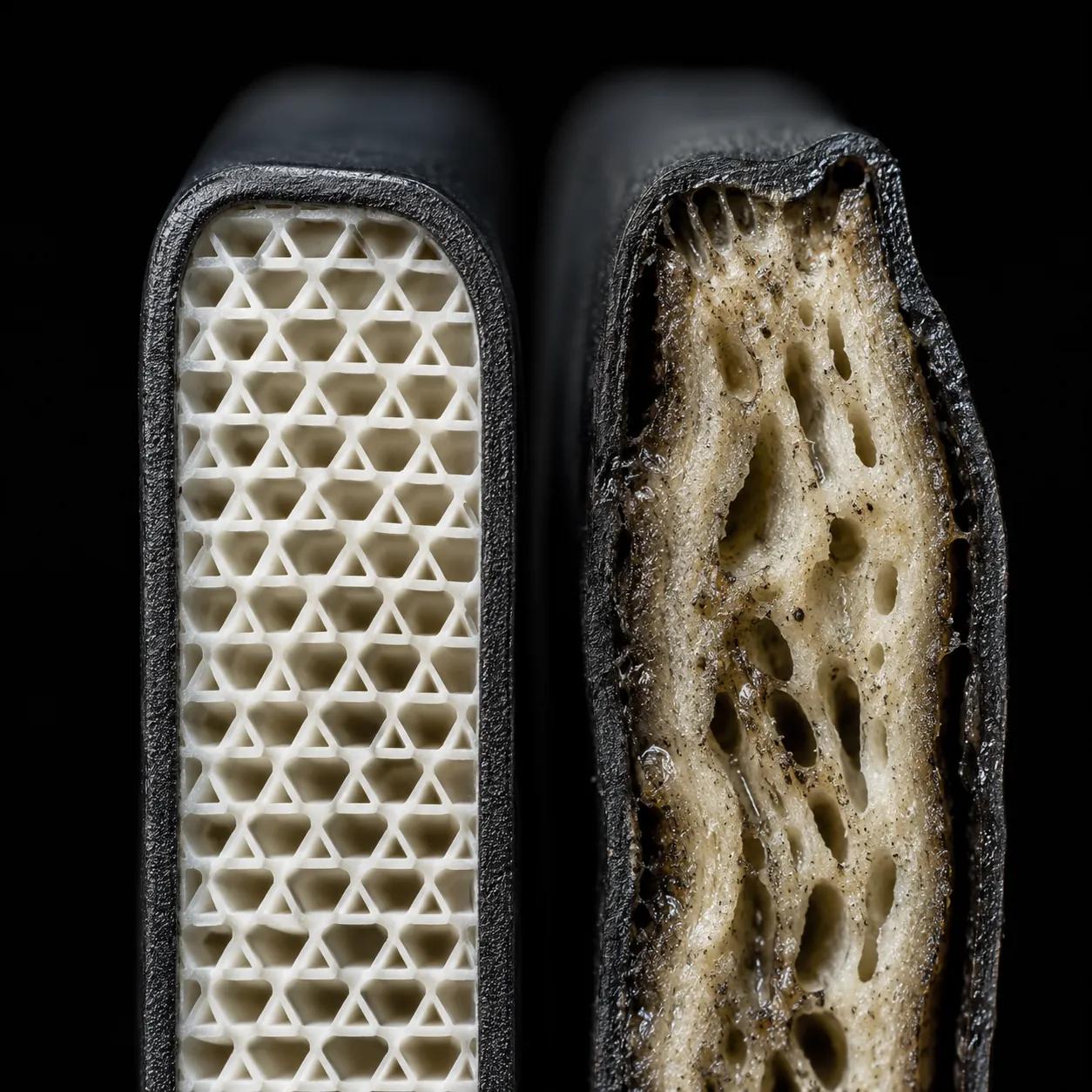
Two consequences follow for a build, and neither is about feel. Core volume rises 14.3% at an identical footprint, which is a bill-of-materials line. And the stiffness change lands you in a different place against the one published threshold that thickness actually pushes you toward.
The stiffness floor your core thickness has to clear
Here is where most of page one is simply wrong, and it is worth being precise because the error changes which direction you should worry about.
Numerous paddle blogs describe a "deflection limit" imposed by USA Pickleball. The word deflection does not appear anywhere in the fifteen pages of the USA Pickleball Equipment Standards Manual. Not once. The deflection test that exists belongs to a different body — the United Pickleball Association of America — and it runs in the opposite direction from a limit.
UPA-A's published Average Deflection Force protocol sets a pass criterion of 46 lb or more on both faces, at ambient conditioning of 70–75°F. The measurement applies a 5 lb preload, zeroes, then compresses to 0.0625" beyond the preload position at a crosshead speed of 0.05 in/s and records the force at that depth.
Read the direction carefully: ADF is a minimum. It is a floor on stiffness, designed to stop soft, over-flexing constructions. A thicker core raises panel stiffness, so on this test thickness works in your favour rather than against you.
| Threshold | Body | Direction | Where thickness pushes you |
|---|---|---|---|
| ADF ≥ 46 lb, both faces | UPA-A | Floor — stiffer passes | Thicker core adds margin |
| PBCoR not to exceed 0.43 | USA Pickleball | Ceiling — too lively fails | Build-dependent; the opposing bound |
| Spin ≤ 2200 RPM at any angle | UPA-A | Ceiling | Surface-driven, not thickness-driven |
The ceiling on the other side, and where we cover it
On the ceiling side, USA Pickleball's PBCoR limit was set at 0.44 effective 1 November 2024 and reduced to 0.43 effective 1 November 2025 — so 0.43 is the operative figure today, and the protocol is published by Element U.S. Space & Defense. Thickness is one of several build variables that move PBCoR, and we have covered that test in depth separately: see PBCoR testing and paddle compliance rather than treating it as a thickness question here.
One practical note if you are sending samples. UPA-A requires paddles to be conditioned for no less than 4 hours and no more than 24 hours, and for every minute a conditioned paddle spends outside the chamber it must go back in for 15 minutes before the next test. Build that into the sample schedule you agree with your factory; it is a real constraint on how fast a re-test can happen. UPA-A also notes its certification is not mandatory for play so long as the paddle holds USA Pickleball certification and sits on the USAP Approved Paddle List — which makes it a market-access decision rather than an automatic cost.
Offering both thicknesses is a second SKU, not a second option box
On a product page, 14mm and 16mm look like a dropdown. In your operation they are two products.
Start with the naming rule, because it is the one people discover late. Clause 2.E.7 requires that "paddles with different core material, surface material, or other significant differences must have a unique name or number," alongside a clearly marked brand and model designation and the approval seal.
Do not let anyone tell you this is settled — including us. 2.E.7 names different core material and "other significant differences." It does not state in terms that a thickness-only change is a significant difference. USA Pickleball does operate a lighter route: its submission FAQ defines a Similarity Submission as "a paddle that uses identical materials, manufacturing, and surface finishing processes as a previously approved paddle," whose "model name will need to be differentiated from the base paddle." Whether your 14/16 pair qualifies is a question for the certifying body in writing, before you budget. Anyone who answers it for you from a blog post is guessing.
What certification actually costs per thickness
The cost of getting that answer wrong is public on the UPA-A side. Its 2026 schedule lists an annual fee of $10,000 per brand and $3,000 for each paddle, valid for 24 months with an eight-week turnaround; expedited service is $2,500 for four weeks, super expedited $7,500 for two weeks, and a failed paddle costs $2,000 to re-submit. Testing runs through Pickle Pro Labs with the University of Massachusetts Lowell.
Two warnings on those numbers. First, a widely-circulated set of 2025 figures — $20,000 annual, $5,000 per model, $1,000 per variation — is stale; the organisation's own current page shows the schedule above. Second, we are not quoting a USA Pickleball fee here, deliberately: that schedule sits behind a manufacturer login, and the third-party figures floating around disagree by more than an order of magnitude. Register and price it yourself rather than budgeting from a blog.
The three tooling questions to put in your RFQ
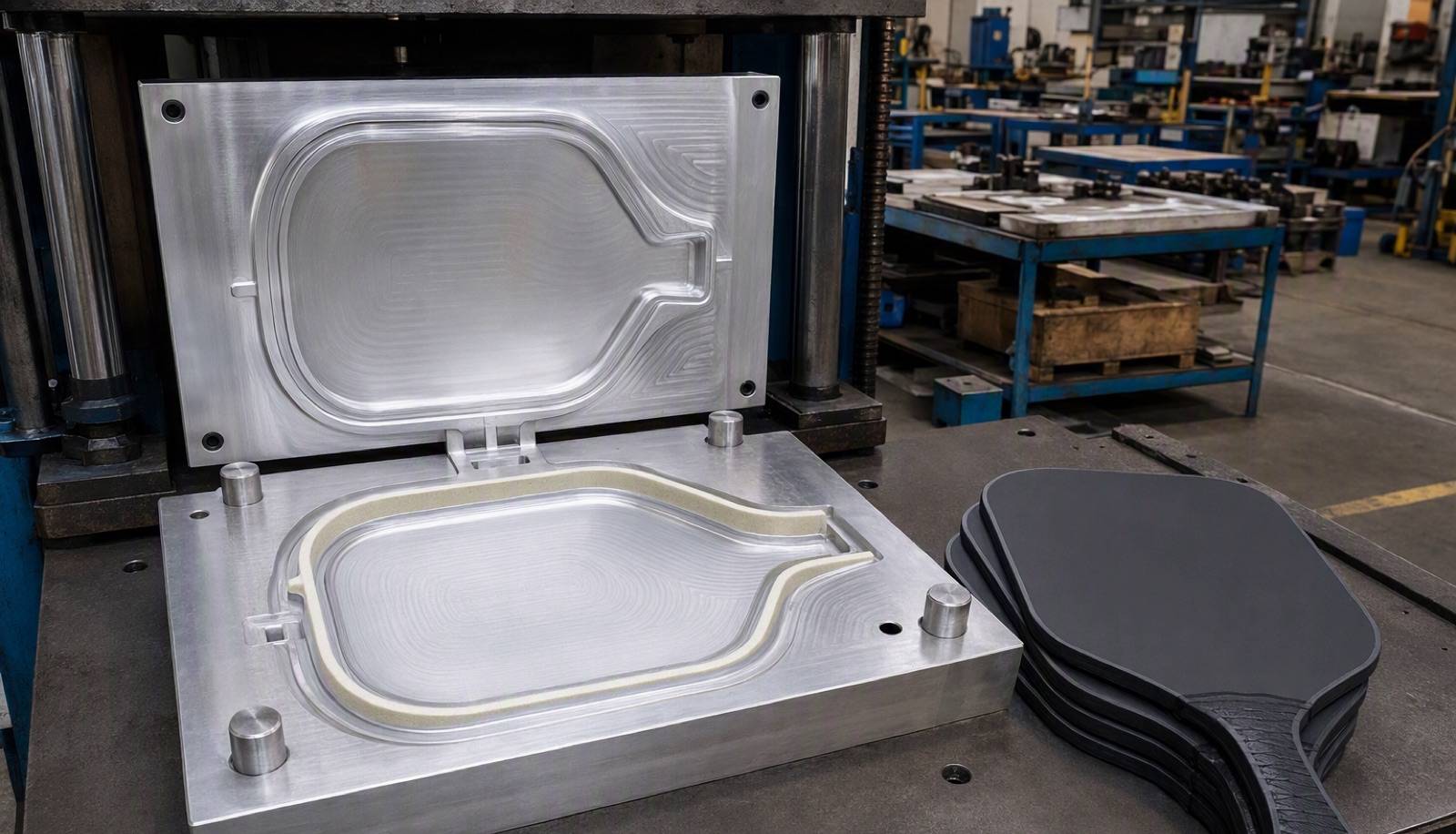
Then there is tooling, and this is where you need answers specific to the supplier in front of you rather than a general rule. Put these three in your RFQ in writing: does the existing tool run both thicknesses or does the second thickness need its own cavity depth; does the edge-guard channel change with core depth; and what press stop or shim controls finished thickness. Ask for the per-unit cost delta and the sample lead time for the second thickness as line items on the quotation. Those figures are supplier-specific and they are not published anywhere — including here.
Volume is the part brand owners underestimate. Splitting a run across two thicknesses splits your MOQ, your forecast accuracy and your safety stock across two lines that do not substitute for one another when one sells out. Our own 3K carbon fibre paddle listing shows variants specified by millimetre with the paddle MOQ stated on the page, which is the level of detail worth demanding from any supplier before you commit to carrying a pair.
For brand owners weighing a single-thickness launch against carrying a 14/16 pair — not for players choosing a paddle for themselves. Send your target spec and order volume and we will come back on tooling, MOQ split and sample lead time for each option.
Talk through the OEM optionsWhat changes in QC when the core gets thinner
A thinner core does not just feel different. It loads a specific interface harder, and that tells your inspector where to spend attention.
The NASA report gives the relation directly. For a facesheet carrying an imperfection, maximum facesheet-to-core flatwise stress goes as σz = 2·Ec·W₀ / (tc(Pcr/P − 1)), where tc is core thickness. Flatwise stress scales as 1/tc — halve the core and you double the peel stress at the bond line for the same imperfection.
That is a mechanism, not a defect rate. It does not predict how many paddles fail, and any supplier who quotes you a delamination percentage by thickness should be asked where the data came from. What it does justify is an inspection priority: on a thinner build, the face-to-core bond is working harder, so bond-line and edge integrity deserve more of your AQL attention than they would on a thicker panel. Our paddle quality control guide covers how to structure that inspection.
Ongoing compliance is a listing risk, not just a warranty one
There is a second exposure that is easy to file under warranty when it is really compliance. Clause 2.F.2 makes manufacturers subject to ongoing testing "to ensure that all products as produced and sold are identical to the paddle that has been tested/certified." Clause 2.F.2.a goes further: paddles must remain compliant "over the entire useful life," explicitly "inclusive of any degradation to benefit." And under 2.F.1, approval may be revoked on 18 months' notice if equipment is found to have been materially changed or if it materially degrades under ordinary use.
Read commercially, that means a construction which softens in service is not only a returns problem — it is a listing risk. It is also the reason to treat thickness as a controlled dimension with a tolerance rather than a nominal number, because "materially changed" is measured against the sample you got approved.
The thickness lines to put on your spec sheet
Most disputes we see described in this category are not disagreements about quality. They are two parties reading the same word differently, months apart. These are the lines that remove the ambiguity.
- Nominal thickness and tolerance. State both — "16.0mm nominal, ±0.3mm" — never a bare nominal. A tolerance you set is a tolerance you can inspect against; a nominal alone is an opinion.
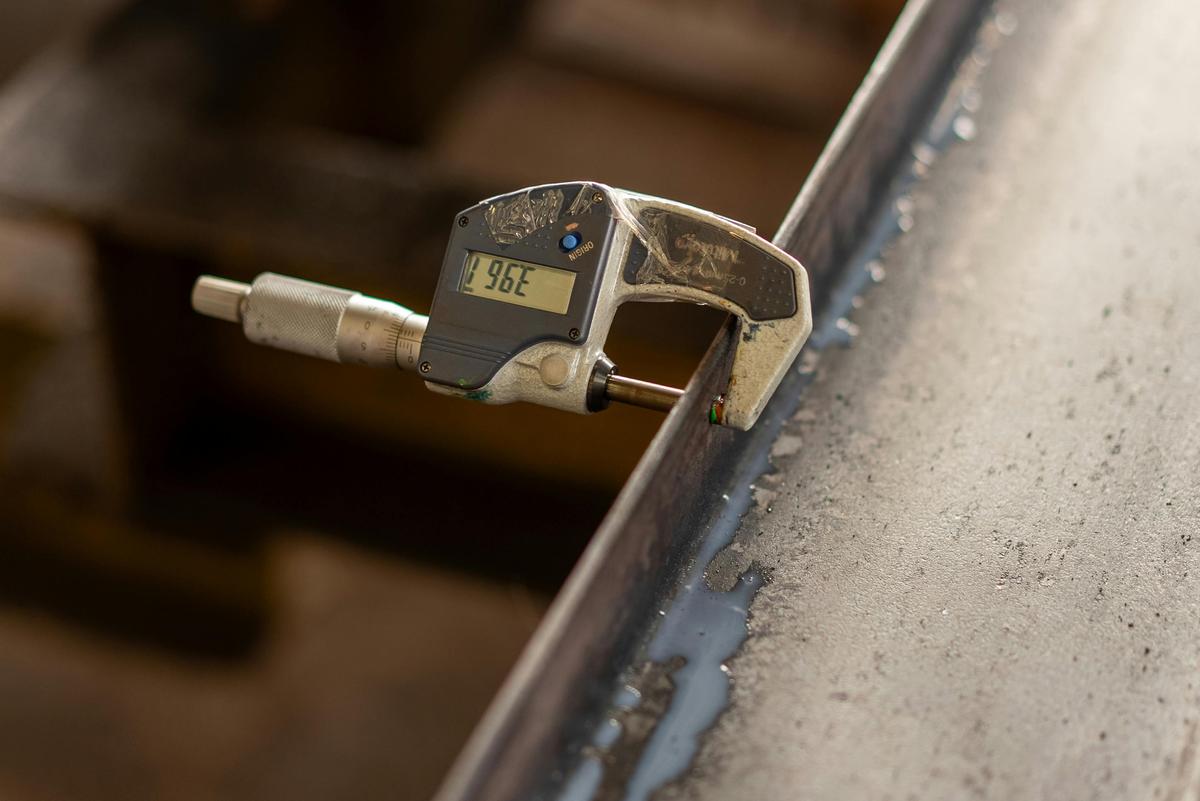
- Measurement point and instrument. Name where thickness is measured (for example, at the panel centre and at four points inboard of the edge guard) and with what. Core depth and finished paddle depth are different numbers, and the edge guard hides the difference.
- Certification clause. Name the list and the version of the limit that applies — the USA Pickleball Approved Paddle List, and PBCoR not to exceed 0.43 as in force since 1 November 2025 — so a mid-programme rule change is a conversation and not an argument.
- Model designation. If you carry both thicknesses, write down which model name or number attaches to each, per 2.E.7, and record the certifying body's written answer on whether they submit as one family or two.
- Sample approval. Tie production to a retained, signed approval sample and state that any change to core material, thickness or lay-up voids it. Clause 2.F.2 is your leverage here — production must match what was certified.
What to check before you approve a thickness sample
The lines above only do their work if someone verifies them against the sample that comes back. This is the check sequence those clauses imply — a documented procedure, not a claim about any particular inspection:
- Measure, do not accept. Take thickness at the stated points with the stated instrument and record the readings. A supplier's declared nominal is not a measurement.
- Separate core depth from finished depth. Confirm which one the quoted figure refers to, because the edge guard and face lay-up sit between them.
- Check spread, not just the mean. Several paddles from the same run tell you whether the tolerance is real or whether one good sample was selected for you.
- Inspect the perimeter bond. On a thinner build this interface is carrying more stress for the same imperfection, so it is where attention buys the most.
- Retain and sign the approval sample and reference it by number in the PO, so "materially changed" has something to be measured against later.
If you want a second pair of eyes on those lines — a brand owner about to send a spec sheet to a factory, rather than a player picking a paddle — send us the draft on WhatsApp and we will mark up the thickness and sample-approval clauses. For the full document, our paddle spec sheet template covers the other sections.
Watch: how the two thicknesses differ in play
The spec-sheet view above is the part that governs your build. It is still worth seeing what the difference looks like in the hand, because it is what your customers will describe back to you in reviews — usually in the language of pop and control rather than stiffness and dwell time.

"Comparing Paddle Widths: Which is Better for You — 16mm or 14mm?" by Pickleball Effect. Third-party educational video, linked for the player-side perspective; it is not a PickleOEM production.
Which thickness should you build
The honest answer is that the standard has already told you it does not care, which hands the decision back to your positioning and your operations.
| Build | Best for | Not for |
|---|---|---|
| 16mm only | A first launch, a club or rental fleet, or any programme where one SKU has to satisfy a broad skill range and forgiveness matters more than peak power | A brand positioning explicitly on power or fast hands |
| 14mm only | A focused offensive product with a defined audience, where you accept a smaller effective target area as a positioning choice | A first launch with no sales history, or a rental fleet |
| Both | An established range with sell-through data per thickness and volume to absorb two certifications and two forecasts | A first order — you are paying twice to learn something one thickness plus review data would tell you |
If you are launching, the defensible default is one thickness, specified tightly, with the tolerance and measurement method written down — then let real sell-through decide whether the second is worth its certification and its forecast. The related decisions sit next door: paddle weight and thickness together, and honeycomb cell size, which is the variable underneath thickness that most spec sheets never mention.
Before you send anything to a factory, three numbers should come from a quotation rather than from an article: the per-unit cost delta between the two thicknesses on that supplier's tooling, whether the second thickness needs its own cavity, and the sample lead time for each. We have not printed those here because they are specific to a tool and a supplier, and a plausible-looking number would be worse than none.
Frequently asked questions
Is there a legal or regulatory limit on pickleball paddle thickness?
No. USA Pickleball's Equipment Standards Manual states at 2.E.3 that there is no restriction on paddle thickness, and 2.E.4 says the same for weight. Size and rigidity are constrained; thickness is not.
Does USA Pickleball impose a deflection limit?
No. The word does not appear in the manual. The deflection test is UPA-A's Average Deflection Force, and it is a minimum of 46 lb on both faces — a stiffness floor, not a cap.
Do I need a separate certification for each thickness?
Get it in writing from the certifying body. Clause 2.E.7 requires a unique name or number for different core material or other significant differences, and a Similarity Submission route exists, but neither document resolves a thickness-only change.
What does a second thickness cost to certify?
UPA-A publishes $3,000 per paddle for 2026, valid 24 months, plus a $10,000 annual brand fee. USA Pickleball's schedule sits behind a manufacturer login, so price that one directly rather than from third-party figures.
How much stiffer is 16mm than 14mm?
Sandwich bending stiffness scales with the square of face separation, so the idealised arithmetic gives roughly 31% for that step. Treat it as direction and magnitude — a real paddle departs from the ideal.
Which thickness should a new brand launch with?
Usually one, not two. A single well-specified thickness plus real sell-through data costs less than two certifications, two forecasts and two safety stocks bought before you have any demand signal.
What thickness tolerance should I specify?
Specify a nominal, a tolerance, the measurement points and the instrument. The tolerance a given factory can actually hold is a question for your supplier — ask for it as a committed figure on the quotation.
Want to source this quality for your brand?
Contact our factory directly on WhatsApp for an instant MOQ and pricing quote.