Quiet Pickleball Paddles for HOAs & Community Courts: Low-Noise Sourcing Guide
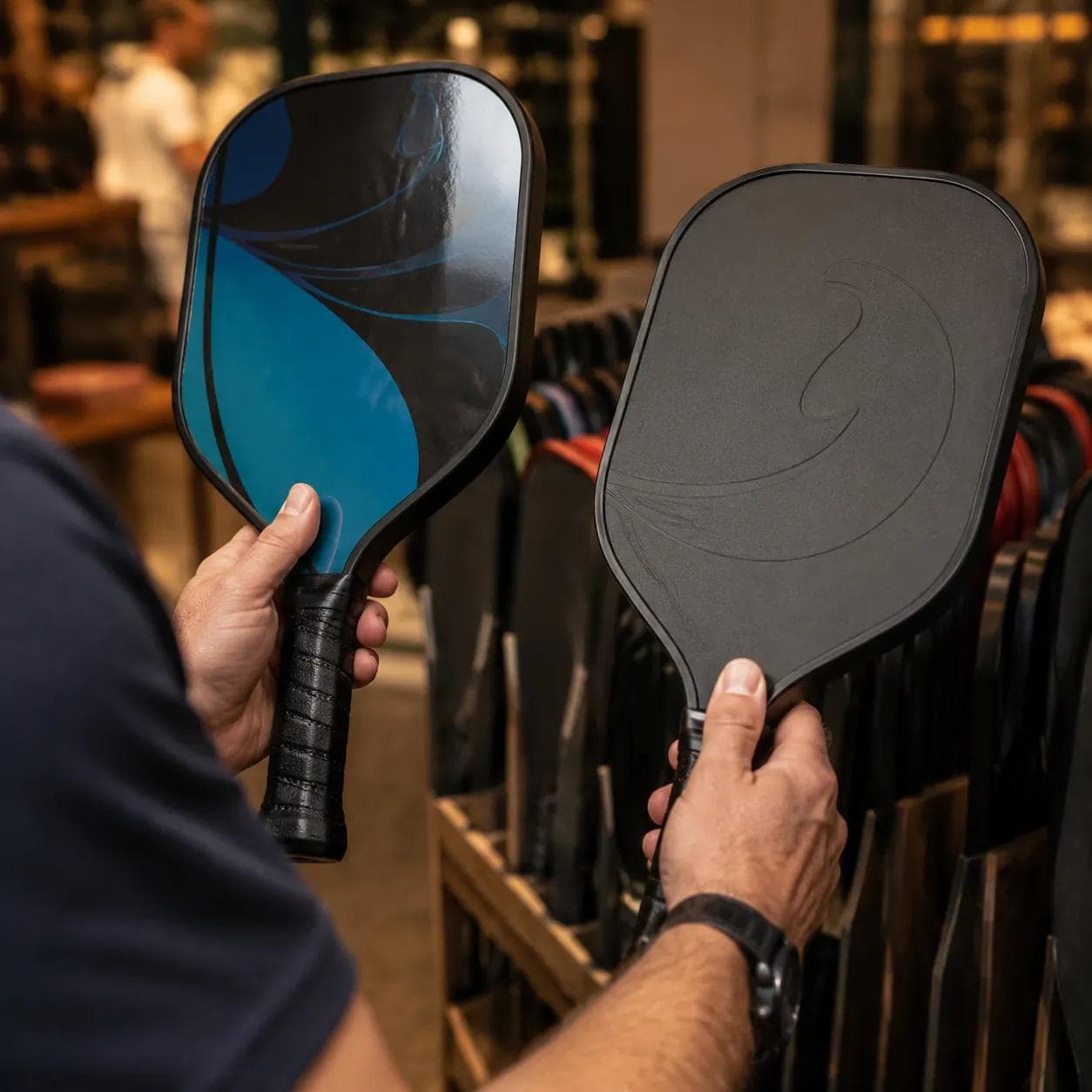
Every community that has built a pickleball court in the last three years has fielded a noise complaint. Some of those complaints turn into HOA rules, court restrictions, hour-of-day limits, or outright bans — and for retailers who stocked the wrong SKUs, into a returns queue and a hidden inventory-write-down few operators saw coming. The lawsuit-in-Arizona pattern that made national news was the visible tip; behind it are hundreds of quieter policy fights across neighborhood associations and city recreation departments where the future of a court hinges on whether the equipment on it produces sound the neighbors can live with. The equipment side of that fight is a sourcing problem, and it's a problem that has actual answers.
This guide walks through what makes a pickleball paddle "quiet" in a way that satisfies HOAs and municipal noise ordinances — the specific acoustic threshold USA Pickleball uses in its Quiet Category, why the frequency matters as much as the decibel level, what changes at the paddle-material level to hit those numbers, and how to spec and source quiet paddles at wholesale for a community, club, or retail program. We build paddles in-house and can spec toward the Quiet Category thresholds, so the material and construction detail below is what actually moves the sound signature, not marketing.

Key Takeaways
- USA Pickleball's Quiet Category, launched in 2023, certifies paddles that measure under 80 dBA and produce a peak frequency below 600 Hz at ball impact — a roughly 50% reduction in perceived loudness versus a standard paddle.
- A standard pickleball paddle strike averages around 70 dBA, roughly 20–25 dB louder than a tennis stroke — the sound of the sport is a materials story, not just a volume story.
- Frequency matters as much as decibel level for HOA acceptance — the high-pitched "pop" of a standard paddle carries and irritates more than a lower-frequency thud at the same measured loudness.
- Community "green zone / red zone" paddle lists — pioneered by Sun City, Arizona and copied by dozens of associations — are becoming the practical filter that decides which paddles are allowed on which courts.
- At the paddle-material level, quieter construction combines lower-density foam or polymer cores, thicker face laminates, and specific edge-damping treatments — a Quiet Category paddle is a different engineering brief than a competitive tournament paddle.
- Sourcing quiet paddles at wholesale is realistic — the same source factories that build competitive paddles can spec to the quieter construction brief, and MOQ economics are similar; the main trade-off is customer education, not manufacturing capability.
The real HOA problem: this isn't just "loud"
The complaint that gets communities banned from playing isn't the loudness measured on a phone app. It's the specific character of the sound — a sharp, high-pitched "pop" that repeats every one to two seconds and carries far further than a diffuse noise of the same decibel level. Understanding the physics is the first step in solving the sourcing problem.
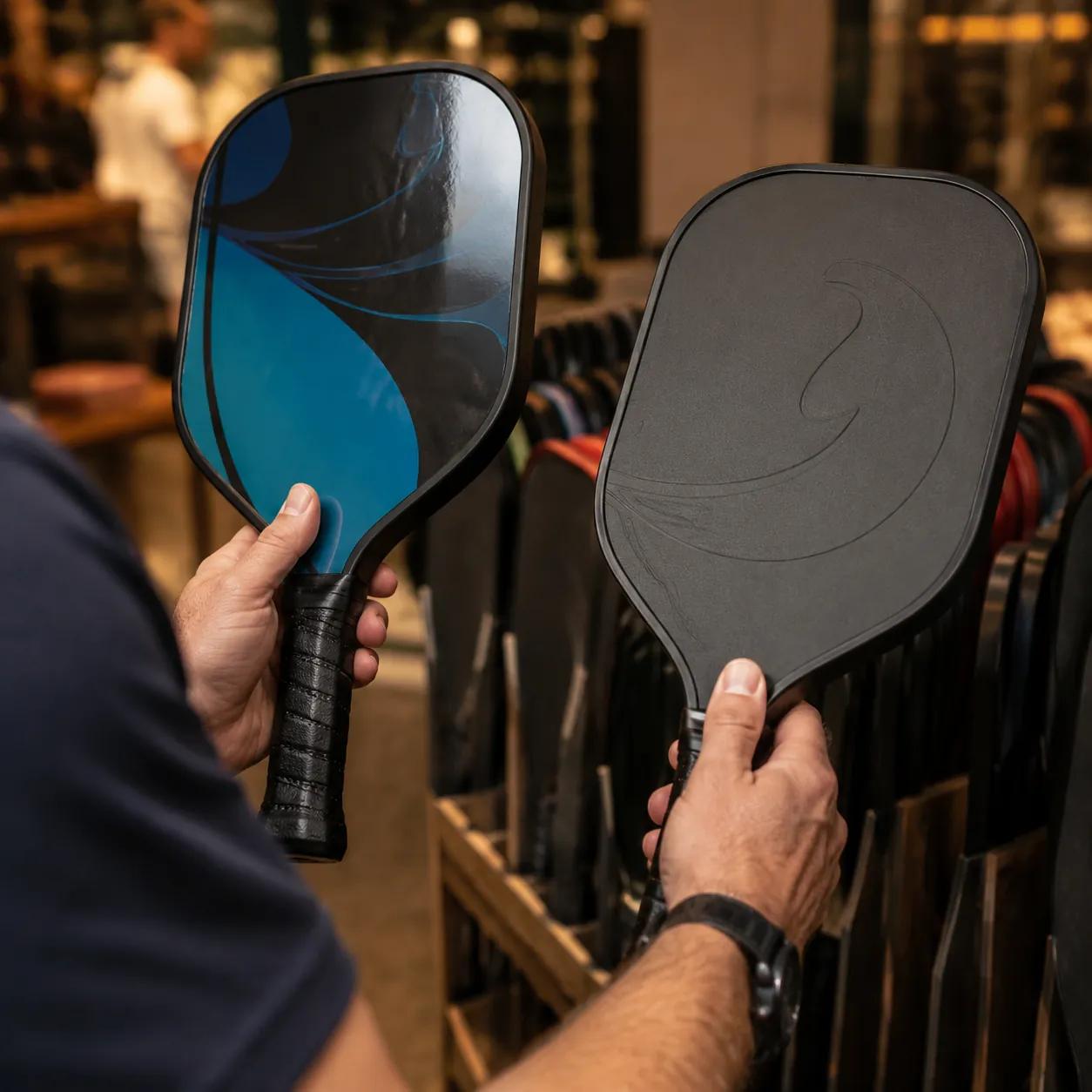
Standard pickleball paddles produce a peak frequency roughly in the 1,000–1,200 Hz range at ball impact — right in the band where the human ear is most sensitive and where the sound carries longest through open air. That's why 70 dBA of pickleball sounds louder from a neighbor's yard than 70 dBA of highway noise: the ear weights it differently, as the CDC/NIOSH noise exposure guidance explains for A-weighted measurements. A quiet paddle isn't just softer; it shifts the sound to a lower frequency band that both measures lower on A-weighted meters and irritates less.
The National Task Force on Pickleball Noise — a coalition of acousticians, urban planners, and community-recreation experts — has been the primary source of the "this is a real, solvable acoustic problem" framing that community leaders now cite in policy decisions. The task force's central point is worth internalizing before sourcing: the noise is manageable with the right equipment and reasonable court design, but ignoring it produces the ban wave that has swept several suburban jurisdictions.
USA Pickleball's Quiet Category: the actual threshold
USA Pickleball launched its Quiet Category in 2023 as a certification program that measures paddle, ball, and accessory combinations against a specific acoustic threshold. The first paddle line to earn the certification was OWL. Understanding the numbers behind the certification is essential to sourcing intelligently.
| Metric | Standard paddle | USA Pickleball Quiet Category threshold |
|---|---|---|
| Peak sound level (dBA at 100 ft) | ~70 dBA (varies by paddle) | Under 80 dBA (measured closer, per protocol) |
| Peak frequency at impact | ~1,000–1,200 Hz | Under 600 Hz |
| Perceived loudness reduction | Reference | Roughly 50% quieter perceived |
| Ball type (typically paired) | Standard outdoor | Quiet-category-approved ball |
Two things are worth flagging. First, the certification measures a system — paddle plus ball — because the ball is a meaningful contributor to the sound signature. Pairing a Quiet Category paddle with a standard hard outdoor ball recaptures some of the "pop." Second, the frequency ceiling (600 Hz) is what does the heavy lifting for perceived quietness in a residential setting: dropping the peak from ~1,100 Hz to under 600 Hz shifts the sound out of the ear-sensitive band and reduces how far it carries. See the current USA Pickleball Quiet Category page for the current approved list and testing protocol; the underlying community-noise measurement methodology maps to ANSI/ASA S12.9 for outdoor sound assessment.
Community "green zone / red zone" paddle lists
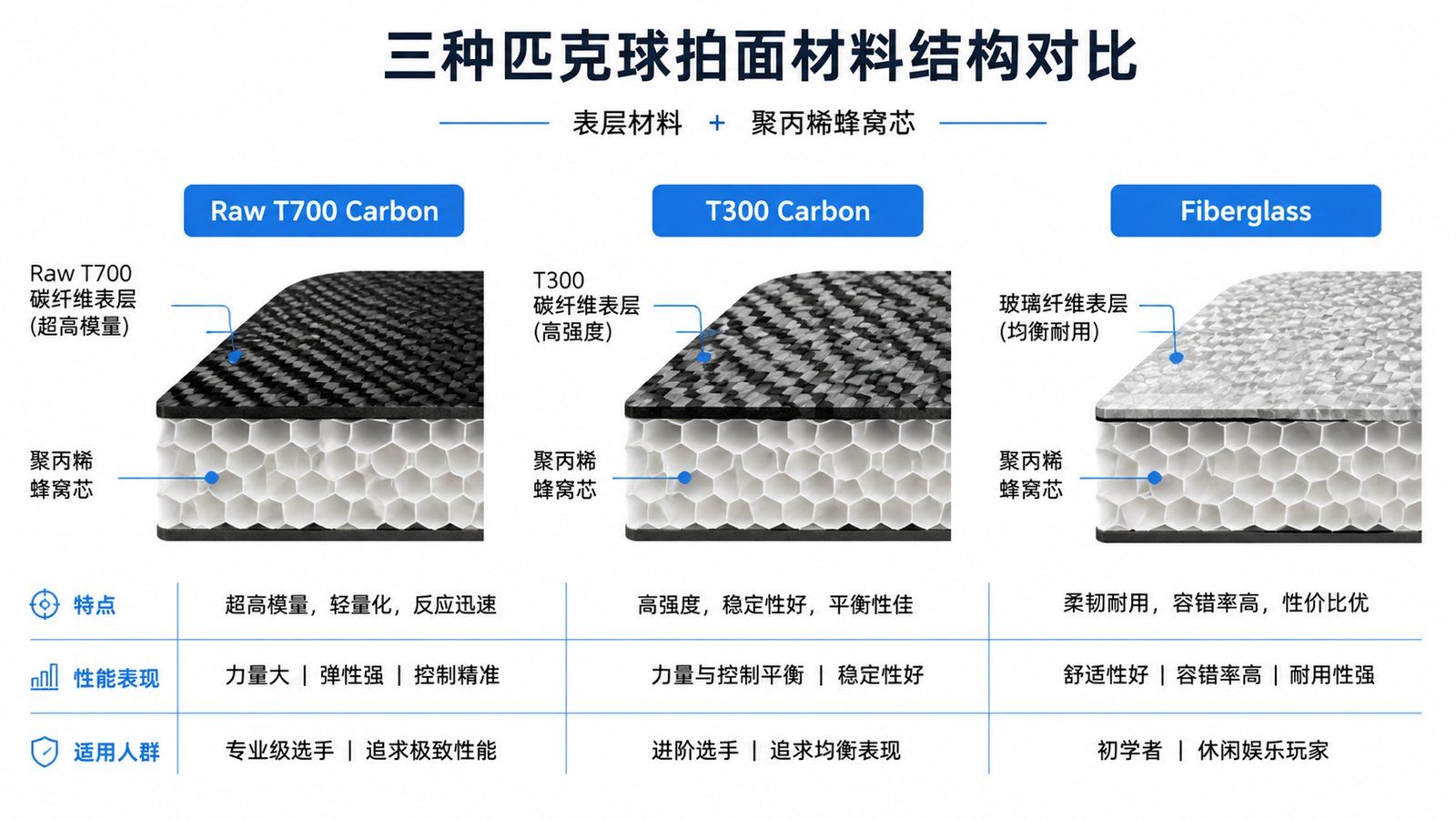
While USA Pickleball's Quiet Category is the national standard, the practical filter at the community level is often a locally-maintained paddle list. Sun City Grand Pickleball in Arizona pioneered the format: after testing dozens of paddles at their courts, the community published a color-coded list — green zone for paddles that met their sound threshold, yellow for marginal, red for banned. Dozens of retirement communities and HOAs have since adopted variations of the same list, sometimes cross-referencing Sun City's directly, sometimes commissioning their own tests.
For a distributor or facility operator, the practical implication is that a paddle needs two things to sell into HOA-restricted markets: an actual acoustic profile that measures quietly, and — increasingly — a presence on either the USA Pickleball Quiet Category list or a community-maintained green-zone list. The first is a manufacturing brief; the second is a market-access step some brands underestimate.
"We built a quieter paddle but nobody at the HOA has heard of the brand yet" is a solvable market-access problem. "We built a paddle that measures loud" is not — the acoustic profile is set at the mold, not fixed later.
What makes a paddle quiet at the material level
A pickleball paddle produces sound in two ways: the direct percussion of ball on face, and the paddle body's resonance as it vibrates from the impact. Both are engineering variables that a source factory can spec. The construction differences below are what separate a paddle that measures around the Quiet Category threshold from one that doesn't.
Lower-density polymer or foam core
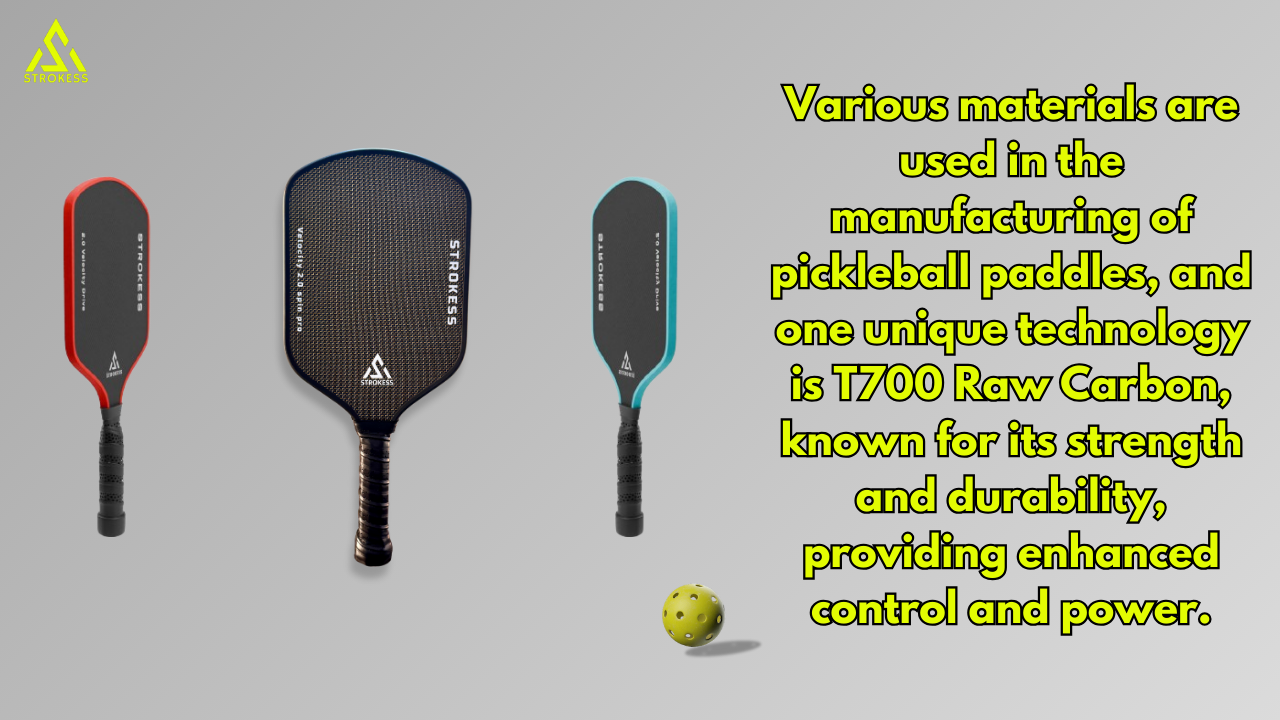
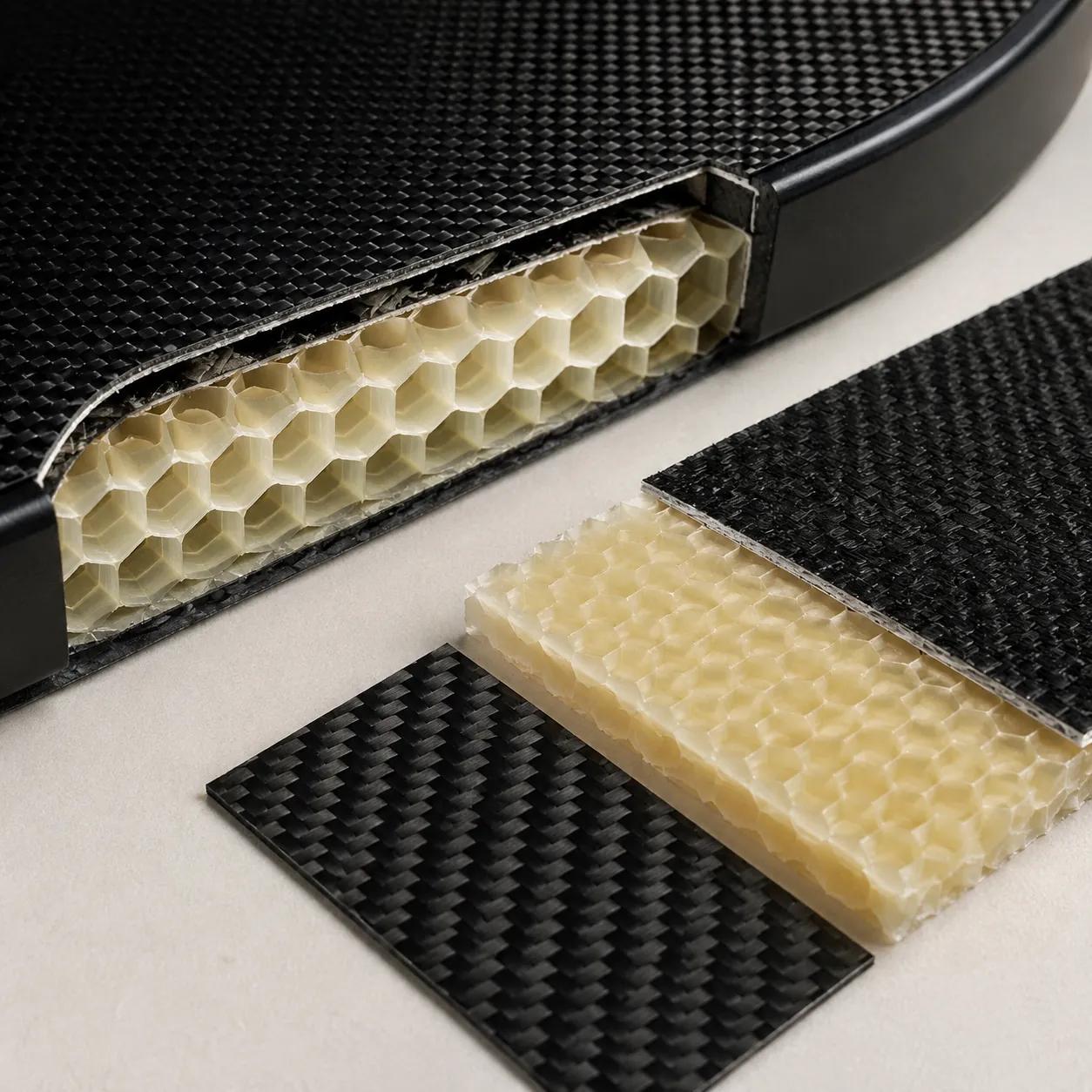
The honeycomb polymer core in a standard paddle is optimized for elastic response — it stores energy on impact and returns it to the ball. That elasticity is also what produces the sharp acoustic pop. A lower-density polymer or a specifically-tuned foam core absorbs more of the impact energy, damping the vibration signature and lowering both the peak dBA and the peak frequency. The trade-off is that this core also returns less energy to the ball, meaning less pop-and-power at competitive levels. For open-play and recreational HOA settings that's a fair trade; for tournament players it's not — which is why Quiet Category paddles are a segment, not a wholesale replacement for competitive paddles. The core-construction picture in general is in our guide to pickleball paddle materials.
Thicker face laminate
A thicker carbon or composite face layer damps the initial percussion peak. Standard tournament paddles run thin faces for feel and response; quieter paddles run thicker layups — often adding a millimeter or more to the face structure. The extra mass and stiffness lowers the peak frequency of the initial "crack" and softens its onset. This is a mold-spec choice, not something that can be added post-manufacture. The comparison between standard face-material grades is in raw carbon vs T300 vs fiberglass paddle faces.
Foam-injected perimeter or edge damping
Modern thermoformed and unibody paddles inject foam around the perimeter to strengthen the edge; the same construction step can be tuned for acoustic damping. A foam-walled paddle — the Gen 3 pattern that has dominated recent competitive design — rings less on off-center hits and carries a lower-frequency signature. The construction trade-offs are in Gen 3 foam-wall pickleball paddles. For quiet-category work, the foam density is often tuned differently than for competitive paddles — softer foam damps more but also feels less crisp at contact.
Unibody / thermoformed construction over cold-pressed
Cold-pressed paddles with separately-bonded edge guards ring at more frequencies because the assembly has more discrete interfaces to vibrate through. Thermoformed unibody construction produces a more monolithic vibration signature — narrower spectrum, easier to damp. The full construction picture is in thermoformed vs cold-pressed pickleball paddles. For Quiet Category work, thermoformed unibody with a tuned foam wall is the practical starting construction; cold-pressed can be engineered quiet but requires more damping layers.
Sourcing quiet paddles at wholesale: what to request
The RFQ for a quiet-paddle order is different from a standard paddle RFQ in a few specific ways. Getting these details right up front turns "quiet paddle" from a marketing claim into a manufacturing spec.
- Target acoustic threshold: Name whether you're targeting the USA Pickleball Quiet Category (<80 dBA, <600 Hz peak) or a specific community's green-zone threshold. The threshold decides the material spec, not the other way around.
- Core density and material: Ask for the core specification (polymer honeycomb density, or foam type and density). "Quieter core" without a number is a marketing sentence.
- Face laminate thickness and material: Face material grade (T300 vs T700 vs fiberglass) plus layup thickness. Quieter paddles usually run thicker layups; expect this in the spec.
- Construction method: Thermoformed unibody with foam-wall perimeter is the practical starting point for Quiet Category work. Specify.
- Ball pairing recommendation: Because the certification measures a system, the factory should recommend which quiet-category or lower-hardness ball pairs with the paddle for the target acoustic profile.
- Certification path: Discuss up front whether the goal is to enter the USA Pickleball Quiet Category (requires formal submission and testing) or to simply engineer to the threshold for HOA-list acceptance. The submission path adds time and cost; the engineering path can be faster to market at the trade-off of not carrying the certification label.
- Written defect and warranty terms: Buyers who ordered "quiet" paddles from a supplier without a written spec sometimes end up with a returns queue and no leverage — the sound signature was never contractually locked. Spell out target dBA/Hz, sampling method, and defect-return rights in the PO, not the pitch deck.
Best for / not for: is a quiet paddle line the right SKU addition?
| Best for | Not ideal for |
|---|---|
| Retailers serving retirement communities, HOAs, active-adult neighborhoods | Retailers whose core market is competitive tournament players |
| Club and facility operators facing municipal noise ordinances or HOA restrictions | Facilities with no noise-adjacent stakeholders (industrial parks, dedicated sports complexes) |
| Rental fleets at community centers where noise complaints have surfaced | Rental fleets at tournament-focused clubs where players want competitive feel |
| Brand launchers targeting a growing quiet-play segment as a differentiator | Brands whose retail positioning is "power and pop" |
What we check on a quiet-paddle sample before approving a run
A quiet paddle sample looks superficially like any other paddle sample — the difference is in the numbers and the ear test. Our sample sign-off adds a few steps to the standard golden-sample workflow (baseline in golden-sample approval for pickleball paddles).
- Sound measurement against the target threshold. Peak dBA and peak frequency recorded on a calibrated meter at a fixed distance and consistent ball speed. Not phone apps — a class-2 sound level meter per IEC 61672 is the minimum for a meaningful reading.
- Paired-ball verification. The paddle plus the intended ball type — not just paddle alone — since the certification measures the pair.
- Center vs off-center hit comparison. Some paddles are quiet on center-face contact but ring louder on off-center hits. Both are measured; both need to sit below the threshold.
- Cold-weather bounce and sound check. Foam and polymer cores stiffen in cold; the sound signature can shift. If the target market has cold winters, samples should be measured in both temperatures.
- Ear test with an actual community stakeholder. If possible, an HOA representative or community court manager listens to the paddle in a realistic play setup. Their approval is often the practical acceptance test regardless of what the meter says.
Real scenario: a retirement community lifts a court ban
An illustrative walkthrough of the arc most quiet-paddle sourcing programs run through — the shape we see repeatedly on real orders.
- Complaint phase. HOA receives noise complaints from residents living near the community pickleball courts. Board votes to restrict hours or ban open play pending a solution.
- Investigation phase. Court manager or facility operator surveys quiet-paddle options. USA Pickleball Quiet Category list and community green-zone lists (Sun City, comparable jurisdictions) get pulled. Multiple paddle spec sheets get compared.
- Sample and measurement phase. Two or three quiet-paddle options are ordered as samples. On-site measurement with a proper sound meter at the actual court — from the property line where the complaints originated — establishes which paddle actually delivers the acoustic profile the situation requires.
- Community sign-off phase. The winning paddle and paired ball are demonstrated to the HOA board or community management, ideally with the same residents who complained present. Written acceptance of the quiet-play equipment as a condition of resuming open play.
- Fleet transition phase. Rental fleet transitions to the approved paddle and ball. Signage indicating "Quiet-Play Court: Approved Equipment Only" is installed. New members and drop-in players use only fleet-supplied gear.
- Retail overlay phase. Facility pro shop stocks the approved paddle and ball at retail for members to purchase. Members playing at the community courts on their own gear are informed of the equipment policy.
The whole arc typically takes 60–120 days from complaint to reopened courts, with the paddle sourcing being the fastest step (30–45 days from spec to delivered samples). The bottleneck is almost always community sign-off, not manufacturing.
Frequently Asked Questions
What is the decibel level of a quiet pickleball paddle?
USA Pickleball's Quiet Category threshold is under 80 dBA at the certification test distance, paired with a peak frequency below 600 Hz. Standard paddles typically measure higher on both metrics. A roughly 50% reduction in perceived loudness versus a standard paddle is the practical outcome of hitting both thresholds together.
Are quiet paddles allowed in USA Pickleball tournaments?
A paddle certified in the Quiet Category has passed the acoustic standard but must also be on the general USA Pickleball approved paddle list for sanctioned tournament use, and match all other equipment specifications. Some Quiet Category paddles are tournament-approved; some are engineered for open-play only and are not. Confirm the specific paddle's tournament status separately from its Quiet Category status.
Do quiet paddles play as well as standard paddles?
Quiet paddles typically produce less "pop" and less power at the top of the paddle's range. For competitive tournament play, standard paddles feel more responsive; for open-play, recreational, and community-court use, the difference is imperceptible to most players. The trade-off is real but is a segment choice, not a universal downgrade — a well-made quiet paddle plays well within its intended context.
Can any factory make a quiet paddle at wholesale?
Source factories that produce thermoformed unibody paddles can spec to the quiet-category construction brief — lower-density cores, thicker face laminates, foam-wall perimeters tuned for damping. Not every factory has run this brief before, and asking for real sample sound measurements before committing to a large order is the standard due diligence. MOQ and unit cost economics are similar to standard paddles at the same construction tier.
Does the ball need to match the paddle for quiet play?
Yes — the sound signature is a paddle-plus-ball outcome. A Quiet Category paddle paired with a hard standard outdoor ball recaptures much of the "pop" the paddle was engineered to suppress. USA Pickleball's Quiet Category certifies systems (paddle plus ball plus sometimes other accessories) rather than paddles alone, precisely for this reason. Any quiet-play program needs to spec the paired ball as part of the equipment package.
How much do quiet paddles cost at wholesale versus standard paddles?
Wholesale FOB cost is similar to a standard thermoformed paddle at the same face-material tier. The construction spec is different but the raw material and labor content are comparable — a foam-wall perimeter isn't inherently more expensive than a standard edge-guard perimeter. The higher retail price of some quiet paddles reflects positioning and scarcity of options in the segment, not manufacturing cost.
Will a quiet paddle get us off the HOA red-zone list?
If the HOA maintains its own list and the paddle demonstrably meets their threshold in a properly conducted on-site measurement, generally yes — HOAs have been receptive to well-documented quiet-play solutions when the alternative is banning the sport. If the HOA references the USA Pickleball Quiet Category list, being on that list is the fastest path. Community sign-off is a political and practical process; the paddle spec is a necessary but not always sufficient condition — the mechanics depend on the specific HOA and its history with the issue.
Want to source this quality for your brand?
Contact our factory directly on WhatsApp for an instant MOQ and pricing quote.