Adding Protective Eyewear to a Pickleball Line: ASTM F3164, Z87.1, EN 166 and the Tests Your Supplier Must Show
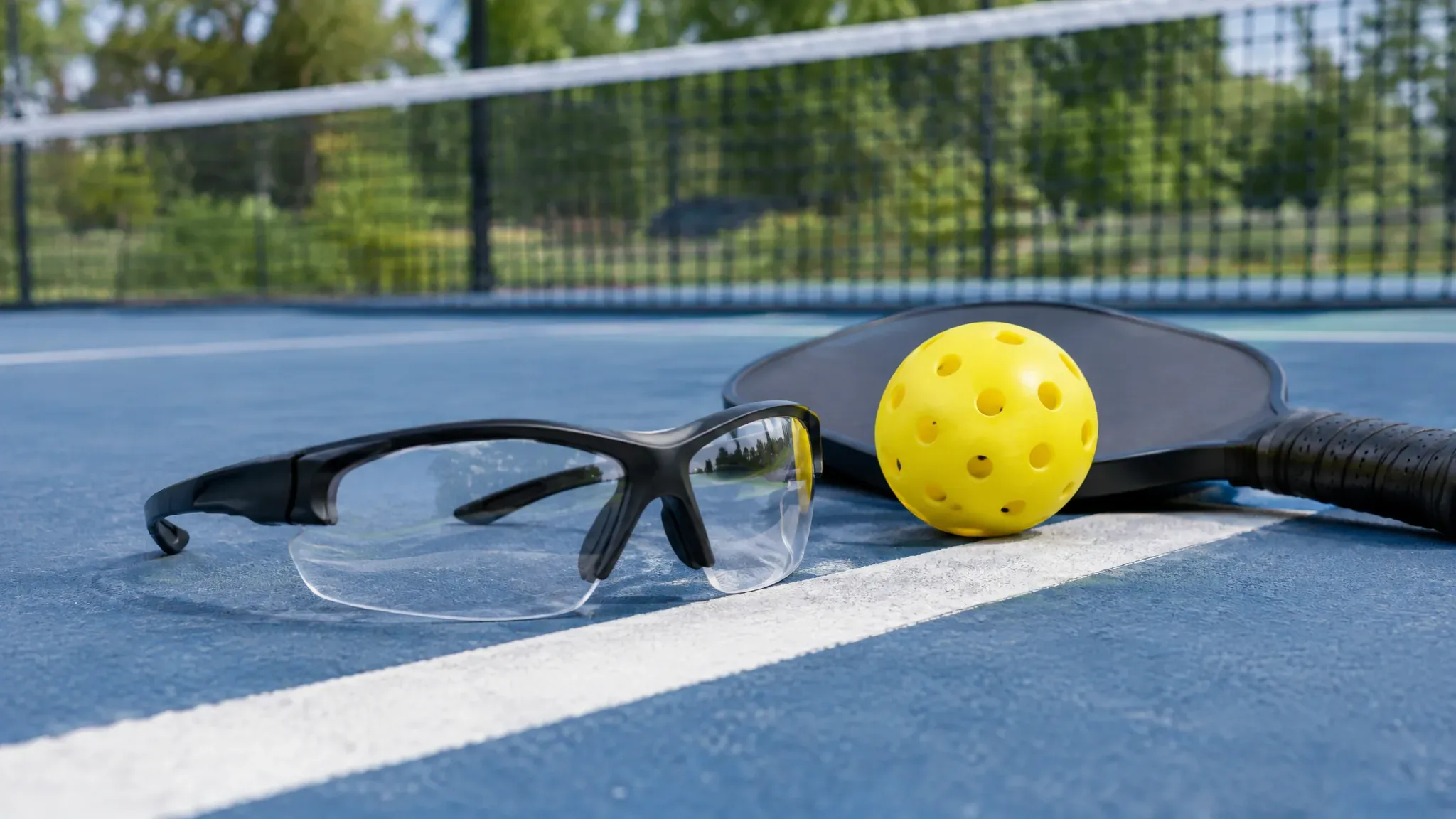
ASTM F3164-24 is the specification to test pickleball eyewear against. Its scope covers eye protectors designed for use by players of racket sports (that is, racquetball, squash, tennis, pickleball), and the December 2024 revision added test methods for pickleball. The two marks most supplier sheets quote do not reach sport. ANSI/ISEA Z87.1-2025 covers occupational and educational eye and face protection and does not cover sports and recreation. And Decision (EU) 2024/2599 set 11 November 2025 as the withdrawal date for EN 166:2001 from the EU list of harmonised standards.
For a brand adding eyewear to a paddle line, that sets the order of work. First get an F3164-24 test report that names pickleball, then clear the market rules. In the US, every eyeglass and sunglass lens, tinted or clear, faces a batch drop-ball test, and the brand importing for resale counts as the manufacturer. In the EU, an impact claim moves the product out of PPE Category I. No rule makes players wear any of it: the American Academy of Ophthalmology notes that pickleball does not require players at any level to wear protective eyewear. The test report is what a protection claim rests on.
Key Takeaways
- Test to ASTM F3164-24; treat Z87, Z87+ and EN 166 marks as occupational tests, not pickleball tests.
- Decision (EU) 2024/2599 set 11 November 2025 as the withdrawal date for EN 166:2001; EN ISO 16321-1, its successor, does not apply to sports eyewear.
- Every US eyeglass and sunglass lens, tinted or clear, needs batch drop-ball tests: a 5/8-inch steel ball weighing about 0.56 ounce dropped from 50 inches. The importer for resale counts as the manufacturer.
- pickleoem makes no eyewear and publishes no eyewear MOQ or lead time; get both in writing, split into testing, certification, production and freight.
To see what an impact-test report is recording, here is a lab drop-ball test filmed by a test-equipment maker, TestResources:

Which standard actually covers pickleball eyewear
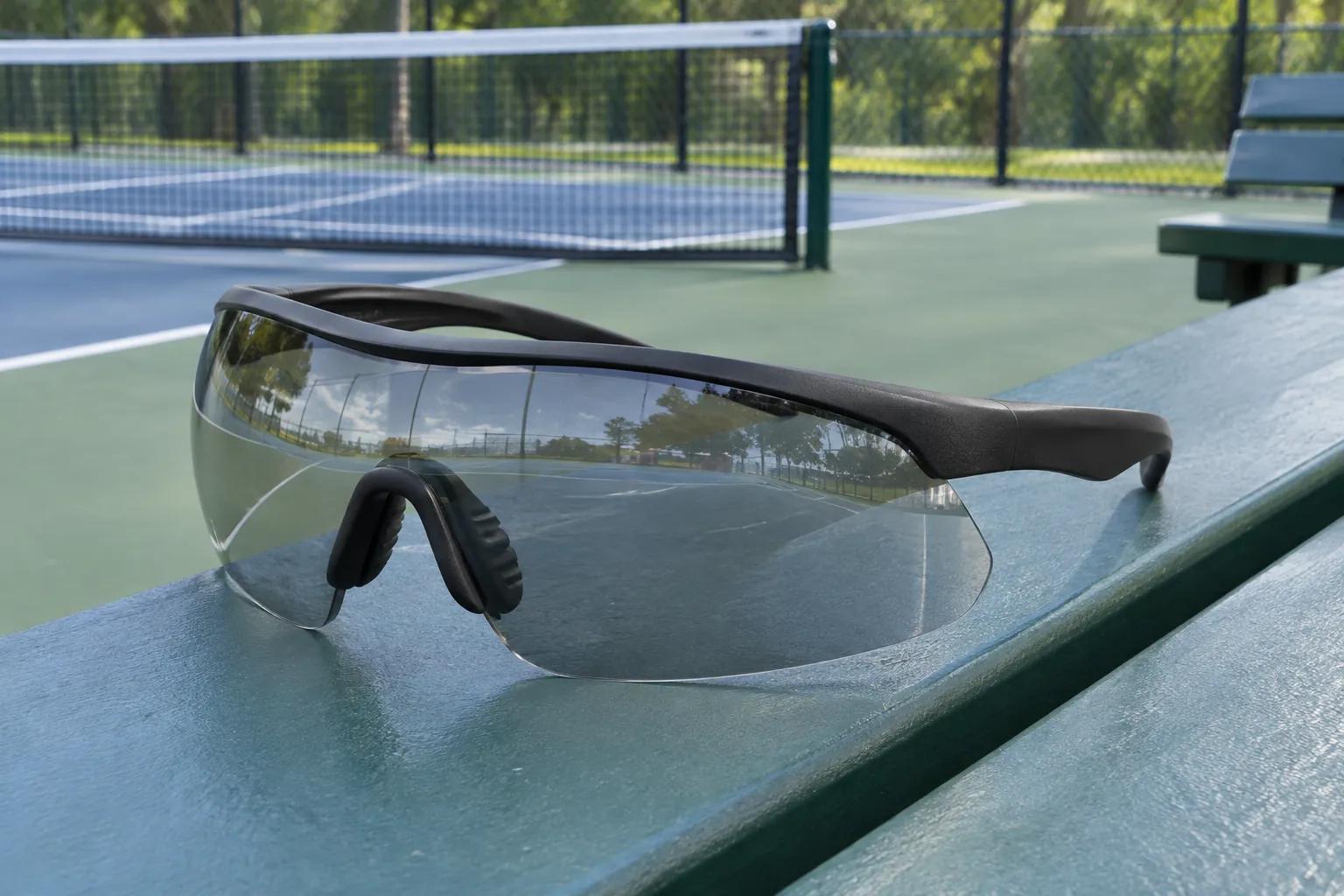
Read each mark on a supplier sheet for its scope, not its logo. The racket-sport provisions left ASTM F803 years ago: ASTM F803-25 covers eye protectors for basketball, baseball and soccer, and the Vision Council notes that F3164-19 had already replaced its racket-sport provisions. F3164-24 supersedes F3164-19, and only the 2024 edition includes pickleball test methods. A report citing F3164-19 therefore predates the pickleball tests.
| Mark on the quote | What it covers | Names pickleball? | Verdict |
|---|---|---|---|
| ASTM F3164-24 | Racquetball, squash, tennis, pickleball eye protectors | Yes | Best for the protection claim |
| ASTM F3164-19 | Racquetball, squash, tennis | No | Ask for a -24 retest |
| ANSI/ISEA Z87.1-2025 (Z87, Z87+) | Occupational and educational eye and face protection | No, excludes sport | Useful extra, not a sport claim |
| ASTM F803-25 | Basketball, baseball, soccer | No | Wrong sport list |
| EN 166:2001 | Occupational eye protection; withdrawal date 11 November 2025 | No | Not an EU sport route |
| ISO 18527-2:2021 | Squash, racquetball, squash 57 | No | Not a pickleball route |
Decision tree: what to require by market and lens
Two questions route the paperwork: where the product is sold, and whether the lens is tinted or the packaging claims impact protection. Each branch adds documents to the F3164-24 report; none replaces it.
Only the EU impact-claim branch needs a notified body before sale; both US branches repeat the 50-inch drop on samples from every batch. A brand selling in both markets needs both sets: the EU certificate and the US batch records answer different regulators, and neither substitutes for the other.
| If the model is | Rule that applies | Evidence to require | Verdict |
|---|---|---|---|
| US, tinted or polarized | 21 CFR 886.5850 (Class I) and 801.410 | F3164-24 report, batch drop-ball records, FDA registration | Most paperwork; plan it first |
| US, clear lens | 801.410 drop-ball applies; 886.5850 status to confirm | F3164-24 report, batch drop-ball records, adviser's view on registration | Same drop test; confirm the rest |
| EU, sunglass, no impact claim | PPE Category I (sunlight) | Module A: internal production control | Lightest EU route |
| EU, impact protection claimed | Not Category I | Modules B and C: EU type-examination certificate | Budget a notified body |
US: what FDA rules add to a tinted lens
Under 21 CFR 886.5850, nonprescription sunglasses are devices with tinted, reflective, polarizing or photosensitized lenses that protect the eyes from bright sunlight. They are Class I (general controls), exempt from premarket notification but not from GMP; product code HQY. So no 510(k), but the quality-system rules still apply.
21 CFR 801.410 says eyeglasses and sunglasses must be fitted with impact-resistant lenses. 801.410 applies to eyeglasses and sunglasses, so a clear plano lens is covered too; only the Class I sunglass classification depends on tint. The test is a 5/8-inch steel ball weighing about 0.56 ounce dropped from 50 inches onto the lens center. For plastic and nonprescription lenses the manufacturer tests a statistically significant sampling of lenses from each production batch, and keeps test results and distribution records for 3 years.
Under 801.410(g), the term manufacturer includes an importer for resale. The tests may be run in the country of origin, but the importer must make the results available to FDA on request. So the brand owns those records: copy the factory's batch results into your own files before each shipment.
Under 21 CFR 807.40, a foreign establishment that manufactures a device imported into the United States must register, list the device and name a US agent. Ask for the registration number before sampling, and have your regulatory adviser confirm in writing how a clear-lens model is classified.
EU: an impact claim moves eyewear out of Category I
Regulation (EU) 2016/425 applies from 21 April 2018. Its Annex I says Category I covers only minimal risks, including damage to the eyes due to exposure to sunlight; Category II covers risks other than those in Categories I and III. Ball impact to the eye is not on the Category I list. A plain sunglass can stay in Category I, but packaging that promises protection from a ball or paddle cannot.
The procedures follow from Article 19. Category I: internal production control (module A); Category II: EU type-examination (module B) followed by conformity to type based on internal production control (module C). Category II means a notified body examines the model before you sell it.
No harmonised standard we could find names pickleball. Decision (EU) 2024/2599 set 11 November 2025 as the withdrawal date for EN 166:2001, amending Decision (EU) 2023/941. Decision (EU) 2023/941 has since been replaced by Decision (EU) 2026/1279, which lists EN ISO 16321-1:2022. EN ISO 16321-1, its successor, does not apply to sports eyewear; and ISO 18527-2:2021 covers squash, racquetball and squash 57. The brand can file the F3164-24 report in the technical documentation, but only the notified body decides what it accepts. Agree that before testing starts. Labelling and CE marking are covered in our EU and UK compliance guide.
The test evidence to demand before you order
F3164 sets frame and lens minimum robustness requirements (impact resistance), optics requirements and downstream Rx filling requirements for optical laboratories and opticians/dispensers. It sets performance requirements for both plano and prescription eye protection devices. Each document below should name the exact model code that will be on your golden sample.
| Document | What it must show | Weak answer |
|---|---|---|
| F3164-24 test report | Edition -24, pickleball, lab name, your model code | Z87+ certificate or an F3164-19 report |
| Prescription scope | Rx carrier or insert tested as sold | Any lab can glaze it |
| Drop-ball records (US, any lens) | Each batch, 5/8-inch ball, 50 inches; copies in your files | One test at design stage |
| FDA registration (US) | Registration number and named US agent | Not needed for a plano lens |
| EU type-examination certificate | Notified body number, model, modules B and C | Self-declared CE or an EN 166 certificate |
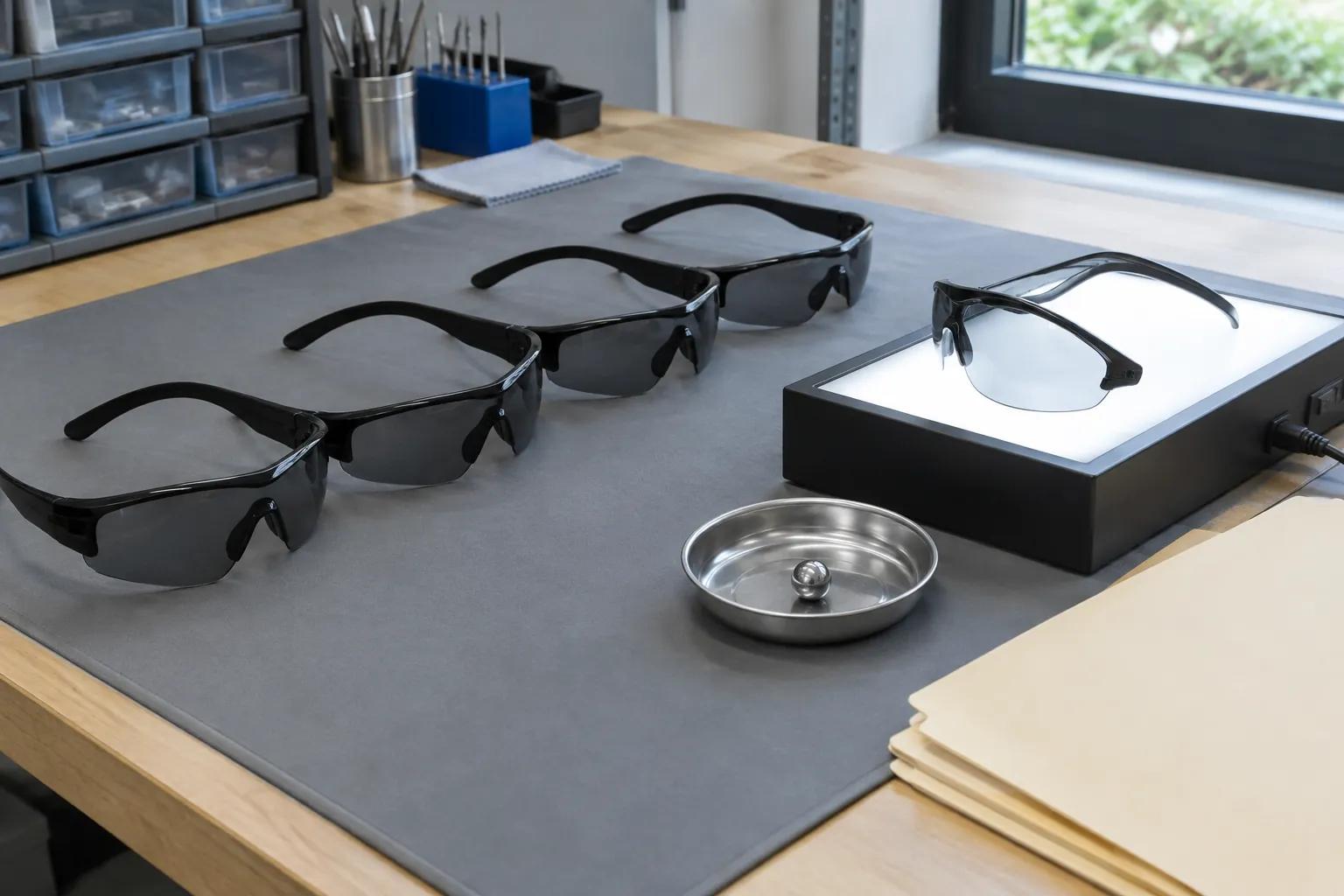
Then hold production to it: the pre-shipment AQL inspection should check that the lens and frame match the tested model, because a tint or frame change is a different product on paper.
MOQ, lead time and the tariff line
We make paddles and balls, not eyewear. Our published MOQ 1,000 pcs (Balls) / 50 pcs (Paddles) applies only to those. For eyewear, ask for MOQ per frame colour and lens tint as well as per order, and ask whether the frame is a stock mould with your logo or a new tool. A stock frame that already holds an F3164-24 report is the short path.
Lead time has four parts, and each needs its own line on the quote: testing (the lab slot for F3164-24 if no report exists), certification (the notified body for an EU impact claim), production, then freight. A supplier who quotes one number has usually left testing out.
Where we stop
We do not make, test or certify eyewear, and we hold no eyewear certificate. Everything on this page about eyewear documents is what to ask an eyewear maker for.
At US entry, check the heading before costing: 9004.10.00 (sunglasses) 2%; 9004.90.00 (other, including safety glasses or safety goggles) 2.5%. Those are general rates from the USITC schedule; see our HTS classification method and Section 301 guide for additional duties. If the eyewear sits in a bundle, our OEM paddle and ball factory quotes the paddles and balls, and the good-better-best catalog guide shows where an accessory tier fits.
Next steps, in order: shortlist frames with an F3164-24 report naming pickleball, take your decision-tree row, and copy the batch drop-ball records into your own files.
For brands and distributors ordering private-label paddles or rotomolded balls at wholesale volume, from a low MOQ, with pre-shipment QC.
See OEM paddles and ballsFrequently asked questions
Which standard applies to pickleball glasses?
ASTM F3164-24, the only specification we found whose scope lists pickleball (see the standards table). It is voluntary, so ask for the test report rather than a logo.
Is ANSI Z87.1 enough for pickleball?
Not as a sport claim; its scope is occupational and educational (see the standards table). A Z87+ mark shows an occupational high-impact test was passed, which is useful, but it does not test pickleball use.
What do the Z87, Z87+ and Z87-2 markings mean?
Z87 is the basic mark, Z87+ indicates high impact, Z87-2 is for prescription lenses. All three belong to the occupational standard, so they describe workplace tests, not pickleball tests.
Do pickleball players have to wear eye protection?
No. The American Academy of Ophthalmology notes that pickleball does not require players at any level to wear protective eyewear. Its ophthalmologist adviser names polycarbonate safety goggles, which have front and side coverage, as the ideal.
Want to source this quality for your brand?
Contact our factory directly on WhatsApp for an instant MOQ and pricing quote.