Moving Pickleball Production to a New Supplier: What Breaks
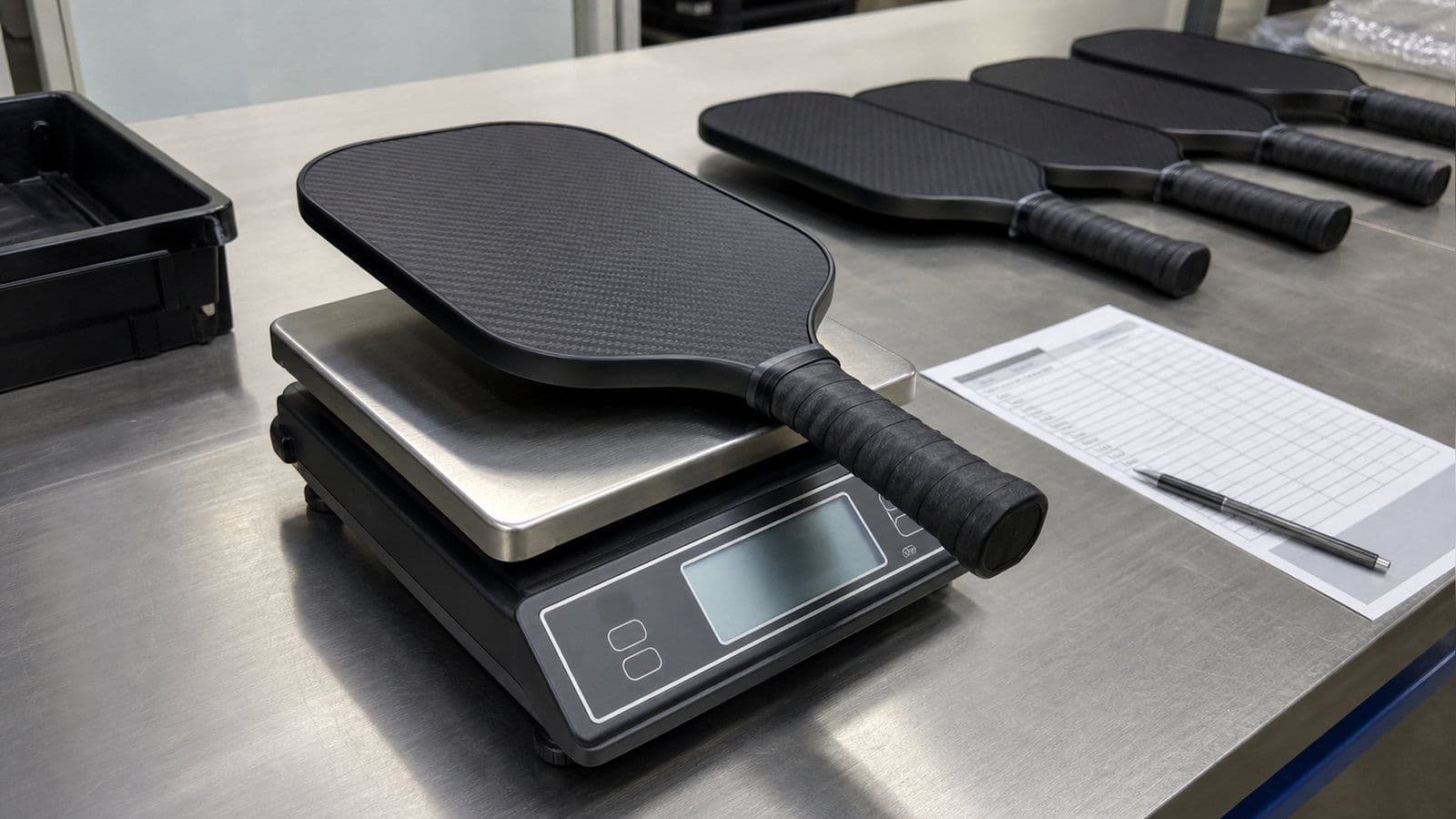
Moving pickleball production to a new supplier is not a shipping problem. It is a re-qualification problem wearing a shipping problem's clothes. The crate is the easy part.
Most guides to moving tooling are written by plastics moulders serving medical and automotive customers, where no outside body re-examines the part when it changes address. Pickleball is not that industry. If your paddle carries a USA Pickleball approval, the governing body's own submission rules treat the factory that makes it as part of what was approved — which means the cheap re-filing route you were probably counting on is closed before you start. That single fact reorders the whole project plan, and it is missing from every general tooling-transfer checklist on the first page of Google.
Key Takeaways
- USA Pickleball defines a Similarity Submission as a paddle using "identical materials, manufacturing, and surface finishing processes" as an approved one — changing factories changes manufacturing, so plan for a full submission, not a similarity filing.
- A full paddle submission consumes nine paddles, split across several testing locations; a ball submission consumes twelve balls. None of them come back.
- Normal testing runs 4 to 6 weeks; expedited runs 3 to 8 business days. That, not ocean freight, is usually the longest single block in the schedule.
- Incoming inspection needs pass/fail criteria, not opinions: paddle faces average no more than 30 µm Rz and 40 µm Rt, kinetic coefficient of friction ≤ 0.1875, gloss ≤ 80 GU.
- Demand six document sets with the steel: drawings, material certificates, recorded shot count, repair log, process parameters, and retained approved samples.
- A steel injection mould entering the US classifies to HTSUS 8480.71.8045 at a 3.1% general rate, plus Chapter 99 additions that change often enough to re-check at entry.
- Anyone who quotes a firm refurbishment price before opening the crate is guessing. Get the inspection first, the quote second.
On this page
- What a Factory Change Does to Your USA Pickleball Approval
- Inspecting the Tool Before It Goes Near a Press
- The Documents That Must Travel With the Mould
- When the Outgoing Factory Will Not Cooperate
- Shipping the Mould as Cargo: Customs and Paperwork
- What the Transfer Really Costs, and Who Pays Each Line
- A Realistic Transfer Timeline: Re-Validation Is the Critical Path
- Frequently Asked Questions
What a Factory Change Does to Your USA Pickleball Approval
Start here, because this decides your calendar and your budget, and almost nobody discovers it in time.
USA Pickleball offers a cheaper, faster route for a paddle that is essentially an existing approved paddle under a new name. It is called a Similarity Submission, and the governing body defines it precisely: "A Similarity Submission is a paddle that uses identical materials, manufacturing, and surface finishing processes as a previously approved paddle." Read the middle word again. Manufacturing is named alongside materials and finishing as part of what has to stay identical.
A different factory is different manufacturing. Different presses, different operators, different cure schedules, different lacquer supplier, different hands doing the final sand. Nothing in the definition carves out "same tooling, new building." Plan on the assumption that a factory move puts you back into a full submission, and treat any softer answer as something you get in writing from USA Pickleball before you rely on it.
What re-submission actually costs you
The bill is not only money. A paddle submission consumes nine paddles and a ball submission twelve balls, split across several testing locations rather than sent to one lab — confirm the current count on the submission form. And they are gone for good: USA Pickleball states plainly that submitted equipment is not returned, because it "cannot guarantee non-destructive testing." So the new factory has to produce a run good enough to certify before you have certification, from a tool nobody at that plant has run before.
Then the clock. Normal testing time is 4 to 6 weeks; expedited testing takes 3 to 8 business days, counted from the day after the paddle arrives at the lab. USA Pickleball notes those timelines move with volume and that the submission form carries the official current guidance, so confirm before you build a schedule on them.
The obligation that follows the parts, not the paperwork
Approval is not a certificate you file and forget. Manufacturers "are responsible for ensuring that production units continue to meet the same specifications as the original certified samples," and USA Pickleball inspects market samples to check. Equipment gets decertified for "failure to maintain consistent production standards," and the requirement runs across a paddle's "entire lifecycle."
This has teeth. USA Pickleball publishes a live Paddle Compliance Report naming brands and models. As displayed on 30 August 2026 it listed five entries — three under investigation, one resolved, and one, Facolos Pro Series Elite X, recorded as removed from the approved list on 24 March 2026. Nothing published connects any of those five to a supplier change, and it would be wrong to imply otherwise. The point is narrower and harder: production drift has a public consequence, and a factory move is the single largest deliberate change to production a brand ever makes.
Where a paddle's power sits close to the limit, the transfer is riskier still. The current not-to-exceed value is PBCoR 0.43, effective 1 November 2025, reduced from 0.44 the year before. A paddle that certified at 0.42 under one factory's press schedule has very little room for a new plant's process to differ. We cover the test itself in our guide to PBCoR testing and paddle compliance.
Inspecting the Tool Before It Goes Near a Press
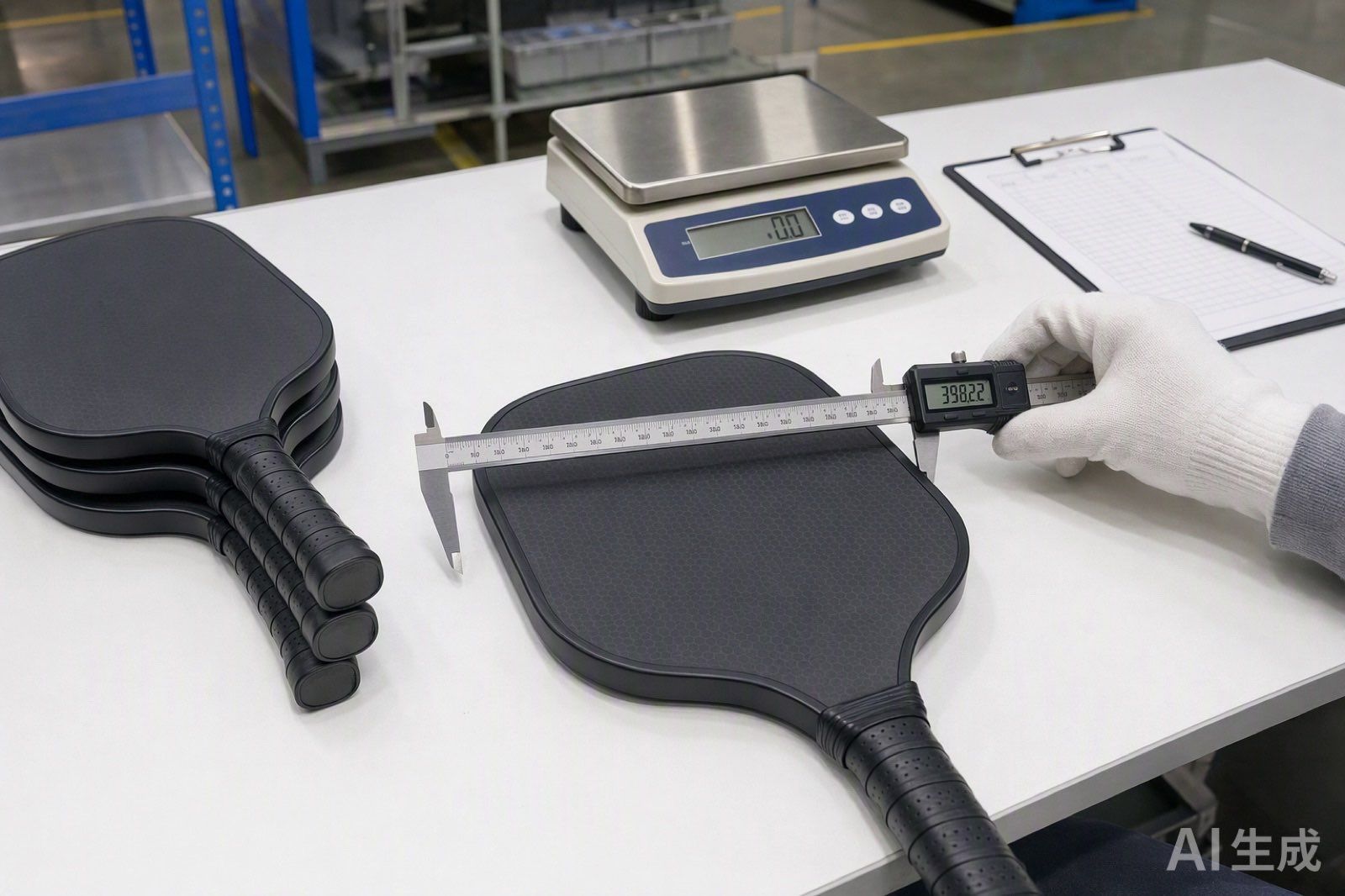
A mould arriving from a factory that just lost the account is not a neutral object. It was last maintained by people who knew they were losing it. Wear on an incoming tool routinely runs worse than the buyer expects, and the gap is usually discovered on the first trial shot rather than on the packing list.
Two separate things have to happen, and buyers frequently pay for one and assume they got both. The first is a physical inspection: strip, clean, and check the tool against its drawings, documenting wear, damage, corrosion and missing components. The second is a trial shot that produces actual parts to measure. A tool can look immaculate and still make parts that miss a limit, because texture depth, venting and cooling do not show up in a photograph.
What to require in the incoming inspection scope
Write these into the purchase order as deliverables rather than asking for "an inspection", which is how buyers end up with a photograph and a thumbs-up:
- Cavity and core surfaces measured and photographed after cleaning, with corrosion and wear marked on a drawing rather than described in prose.
- A parting-line and shut-off check, since flash on a paddle edge affects the combined-dimension measurement.
- Cooling circuits pressure-tested and flow-checked — blocked lines are common on a tool that sat, and they change every process setting downstream.
- Ejection system cycled and inspected, with bent or missing pins listed by position.
- A component inventory against the drawing, so missing inserts surface now rather than during the first production run.
- A trial shot with parts measured against the published limits below, values recorded — not a pass/fail verdict.
Acceptance criteria for a paddle tool
Insist that the receiving factory's report states measured values against the published limits, not a verdict. The USA Pickleball Equipment Standards Manual (Revision 3.0, January 2025) gives you the numbers to write into the purchase order:
| Property | Published limit | What a transferred tool can break |
|---|---|---|
| Surface roughness | Average ≤ 30 µm Rz and ≤ 40 µm Rt per face, six directions; no single point above 33 µm Rz or 44 µm Rt | A re-polished or re-textured cavity face |
| Coefficient of friction | Kinetic COF ≤ 0.1875, per ASTM D1894-14 | A new peel-ply or surface finishing step |
| Gloss | No measurement above 80 GU at 60 degrees | A different clearcoat or lacquer supplier |
| Size | Combined length plus width ≤ 24 in (60.96 cm); length ≤ 17 in (43.18 cm) | A re-cut parting line or a new edge guard supplier |
Note what the manual does not restrict: there is no limit on paddle thickness and no limit on paddle weight. That matters during a transfer, because it means weight drift at the new factory is a brand-consistency and playability problem rather than a compliance one — real, but a different kind of urgent.
Acceptance criteria for a ball tool
Rotomoulded ball tooling is judged on the part more than on the steel, because the process window does most of the work. Diameter must fall between 2.87 in (7.29 cm) and 2.97 in (7.54 cm), with out-of-round variance no greater than ±0.020 in (0.51 mm). Mass runs 0.78 to 0.935 oz (22.1 to 26.5 g). The ball carries a minimum of 26 and a maximum of 40 circular holes.
Then the two process-sensitive tests that catch a new plant's oven settings before USA Pickleball does. Bounce must land between 30 and 34 in (76.2 to 86.4 cm) when the ball is dropped from 78 in (198.1 cm) onto a granite plate, at 70 °F ± 5 °F. Compression per ASTM F1888-09 must average under 43 LBF. Those two run cheaply and in-house; a receiving factory that will not run them on the first trial batch is telling you something. Our guide to pickleball ball mould cavities and hole patterns covers the tooling design side in more depth.
The Documents That Must Travel With the Mould
Steel without paperwork is a paperweight with an appointment at a machine shop. This is the list to paste into the email to your outgoing supplier, and it should go out before the tool is crated, not after.
- Engineering set — 2D drawings and the 3D model, cavity and core detail, gate and runner layout, cooling-line schematic, and the ejection arrangement.
- Material set — steel or aluminium grade and hardness certificates for cavity, core and inserts. Without this the receiving factory cannot judge how much life is left or how the tool will respond to welding a repair.
- History set — recorded shot or cycle count, the full repair log, and the date and scope of the last maintenance. Ask for the number even if you doubt it; a supplier who will not state a shot count in writing has told you the answer.
- Process set — the parameters that produced the approved part: temperatures, pressures, cycle times, cure or oven schedule, and the material grade and supplier actually used, not the one on the original spec.
- Reference set — retained approved samples, ideally the golden sample the programme was signed off against. This is your only physical benchmark once the relationship ends.
- Component set — spare inserts, ejector pins, and any custom fixtures. These vanish quietly and cost weeks to replace.
Two of these carry disproportionate weight. The process set is what lets a new factory reproduce a certified part instead of rediscovering it, and it is the one item outgoing suppliers most often treat as their own property. The retained samples are what make a first-article comparison meaningful; without them you are approving parts against memory. Our guide to golden sample approval covers how that benchmark should have been set up in the first place.
This is for brand owners and importers relocating a live programme — not for one-off orders. We are a Yiwu-based paddle and rotomoulded-ball factory publishing our minimums up front: 50 pieces for paddles, 1,000 for balls. Faces are raw T700 carbon or fiberglass on 13 mm and 16 mm polypropylene honeycomb, thermoformed or cold-pressed. If you send tool drawings and the approved part spec, the useful answer is whether your certification batch fits inside a 50-piece run — for most paddle programmes it does, which is what keeps re-submission from becoming its own tooling order.
Message us on WhatsAppWhen the Outgoing Factory Will Not Cooperate
Assume for this section that your right to the tool is already settled and the argument is about cooperation, not ownership. If you are earlier than that, our guide to mould ownership, NNN agreements and release terms covers the contract side.
The common refusal is not "you cannot have the mould." It is the tool arriving with nothing else: no drawings, no process sheet, no history, no samples. Here is what survives that.
Rebuild the drawings from the part
A finished paddle or ball is a physical record of the cavity that made it. A competent receiving factory can scan or measure an approved sample and reconstruct a workable dimensional drawing. It is slower and it does not recover internal detail like cooling-line routing, but it gives you a documented baseline you own outright. Keep several untouched approved-condition samples aside for this before you tell the outgoing supplier you are leaving.
Re-derive the process window
Losing the process sheet is recoverable and losing the tool is not. A new factory will need to establish its own window on its own machines regardless, because press-to-press transfer of settings is approximate at best. Budget trial shots for it and treat the outgoing factory's parameters, if you get them, as a shortcut rather than a requirement.
Know what leverage still exists
Once the tool is physically out of their building, most practical leverage has already been spent — which is exactly why the document list belongs in the same email as the collection arrangements, not in a follow-up. Sequence matters more than escalation here. Where a supplier stalls, an independent inspection booked at their plant before release at least documents the tool's condition while it is still in their possession, which is worth having if there is a dispute later.
When to stop fighting and cut new steel
There is a point where a heavily worn tool with no documentation costs more to rescue than to replace, especially once you factor in that a full re-submission is likely either way. If the receiving factory's inspection shows significant cavity wear plus missing engineering data, price a new tool alongside the refurbishment before committing. A new mould arrives with drawings, certificates and a shot count of zero — the three things the transfer is failing to deliver.
Shipping the Mould as Cargo: Customs and Paperwork
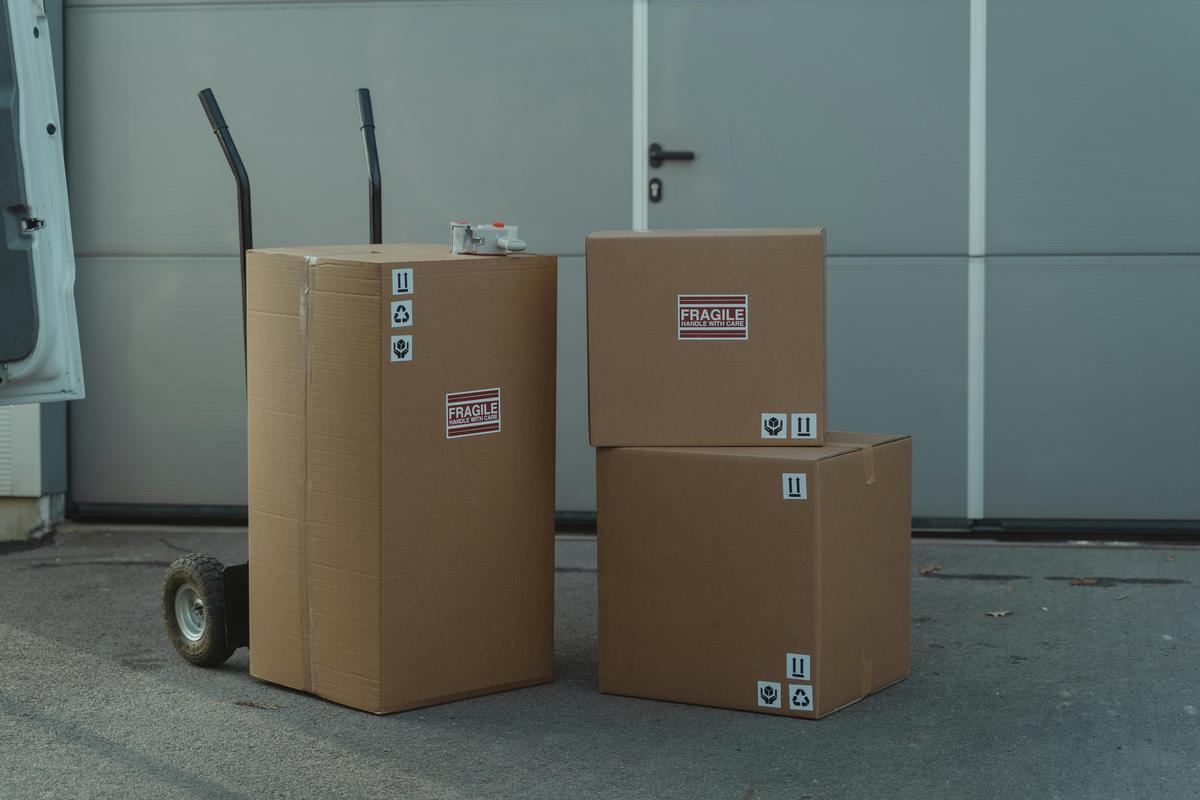
If both factories are in the same country, this is a domestic freight movement and your main job is confirming with the outgoing factory's declaration agent whether the tool sits under any customs supervision that restricts moving it — bonded or processing-trade arrangements can, and the answer is specific to that factory's registration rather than something a general guide can state for you. Ask the question in writing and get the agent's name.
If the tool crosses a border, it becomes a classified good in its own right. A steel injection mould entering the United States falls under HTSUS 8480.71.8045. In ruling N348968, dated 3 June 2025, US Customs and Border Protection classified three steel moulds from China to that subheading and stated the general rate of duty as 3.1% ad valorem. The same ruling then layers on Chapter 99 headings — 9903.88.01 for an additional 25 percent on products of China, 9903.01.24 for an additional 20 percent effective 4 March 2025, and 9903.01.25 for an additional 10 percent under the April 2025 reciprocal-tariff orders.
Treat those add-on rates as a snapshot of the ruling's date, not as today's number. Chapter 99 provisions change faster than any article can track, and the compounding matters: on a mould the additions dwarf the 3.1% base. Confirm the current headings with your customs broker at entry. Our guide to pickleball import duty covers the broader picture for finished goods.
The line most brokers miss
The US tariff schedule carries a dedicated statistical suffix for exactly this situation. HTSUS 8480.71.80.20 covers moulds "temporarily imported for testing, calibration, examination, repair or alteration; returned after being exported for testing, calibration, examination, repair or alteration." If your tool is leaving to be worked on and coming back, or has already done so, that line exists and describes it. Raise it with your broker rather than letting the shipment default to the generic injection-type suffix; whether it helps depends on the specific movement and your broker's read of the facts, but it is a conversation worth having before entry rather than after.
One more practical trap: declared value. Customs valuation of a transferred mould is not a number you pick for convenience. Under-declaring to reduce duty on a tool you own is the kind of shortcut that surfaces years later during an audit, and it is a poor trade against a 3.1% base rate.
What the Transfer Really Costs, and Who Pays Each Line
We are not going to give you a refurbishment price band, and you should be wary of anyone who does. No standards body or trade authority publishes one for pickleball tooling, the ranges circulating on moulders' marketing pages differ by an order of magnitude, and every one of them is quoted by a party who has not seen your tool. What we can give you is the structure, so you can obtain a defensible quote instead of a comforting one. Every figure below is in USD.
| Cost line (USD) | What drives it | Who should carry it |
|---|---|---|
| Incoming inspection and trial shot | Tool size, number of cavities, whether a full strip-down is needed | Buyer, usually — but negotiable as part of the new programme |
| Refurbishment | Cavity wear, corrosion, missing components, whether steel must be welded and re-cut | Quote only after inspection; never accept a fixed price sight-unseen |
| Crating, freight and insurance | Tool weight, distance, mode, and rust-prevention preparation | Buyer, unless the release terms said otherwise |
| Duty and clearance | Classification, declared value, and current Chapter 99 additions | Importer of record |
| Re-validation production | Trial shots, scrap, and the nine paddles or twelve balls you will never see again | Buyer |
| Certification testing and fees | Whether you need standard or expedited turnaround, and how many models move | Buyer — confirm the current fee schedule directly with USA Pickleball |
The line buyers routinely omit from the budget is the last two. They plan the freight and the refurbishment, then discover that re-certifying three models means three separate submissions, each consuming nine paddles produced on a tool that is not yet dialled in. This is where the receiving factory's minimum, not its unit price, decides the bill. Our OEM and private-label manufacturing page runs paddles from 50 pieces: at that floor the nine submission paddles fold into a run you were placing anyway, instead of becoming a dedicated certification batch you pay for twice.
Is a tooling transfer right for you?
| Transfer usually makes sense | New tooling usually makes more sense |
|---|---|
| The tool is recent, documented, and has a recorded shot count | Drawings and history are unavailable and the supplier is uncooperative |
| The paddle shape is central to your brand identity | You were planning a design refresh in the next year anyway |
| You hold retained approved samples to validate against | Inspection shows significant cavity wear needing welded repair |
A Realistic Transfer Timeline: Re-Validation Is the Critical Path
Here is the argument this whole article has been building toward. Every general tooling-transfer guide treats freight as the hard part of the schedule. For a certified pickleball product, it is not close.
Walk an approved paddle through a move between two factories, in order:
- Settle release and collect the documents. The block you control least, and the one that must finish before the tool moves.
- Prepare, crate and move the tool — including rust prevention and, if a border is crossed, classification and clearance.
- Inspect on arrival and agree any refurbishment against the measured findings, not an estimate.
- Run trial shots and compare first articles against your retained approved samples.
- Produce submission-quality units — nine paddles or twelve balls, from a tool the plant is still learning.
- Submit for certification: 4 to 6 weeks normal, or 3 to 8 business days expedited.

There is no single lead time for a transfer, and any factory quoting one before inspecting the tool is quoting a hope. What governs it is the sum of the six blocks above, and the certification block is both the longest and the last.
Set that against the freight. Even an international ocean movement is typically a few weeks door to door. The certification block alone can match or exceed it — and unlike freight, it cannot start until everything upstream has already succeeded. It sits at the end of the chain, which is where delay is most expensive, and it is gated on producing good parts from a tool the new plant is still learning.
The safety-stock arithmetic
The practical consequence is a stock decision made months earlier than most brands make it. Your finished-goods cover has to span the entire sequence, not the freight leg. Build the schedule backwards from the date certification completes, add the buffer, and place the final order with the outgoing factory before you tell them you are leaving — because production goodwill after that conversation is not something to plan around. Our guide to pickleball sourcing lead times covers the normal-production baseline you are protecting.
Where transfers slip
Two points, consistently. The first is the document handover, because it depends on a party with no remaining commercial incentive to help you — mitigate by sending the full list before the tool moves and treating each item as a release condition. The second is the gap between the first trial shot and a part good enough to submit, because that is where an unwelcome inspection finding turns into re-cut steel. Mitigate by paying for a thorough inspection early, when the finding is still a scheduling problem rather than a crisis.
A transfer that is planned around the certification date, with the document list treated as a release condition and the inspection paid for before anyone quotes a refurbishment, is a manageable project. One planned around the shipping schedule is how brands end up out of stock in their selling season with a tool that will not make an approvable part. If you are evaluating who should receive the tool, our checklist for a pickleball factory audit covers what to verify before you commit.

Watch: "Injection Mold Tool Transfers | Step-by-Step Guide" (CrescentInd) — a neutral walkthrough of the general tooling-transfer sequence. It does not cover sporting-goods certification, which is the part this article adds.
Frequently Asked Questions
Does moving my paddle to a new factory void its USA Pickleball approval?
Not automatically, but it closes the cheap route. USA Pickleball's Similarity Submission requires identical materials, manufacturing and surface finishing, so a factory change means planning for a full submission. Confirm your specific case with USA Pickleball in writing.
How many units does a re-submission consume?
A paddle submission takes nine paddles, split across several testing locations; a ball submission takes twelve balls. None are returned, because USA Pickleball cannot guarantee that testing is non-destructive. Confirm the current count on the submission form.
How long does USA Pickleball testing take?
Normal testing time is 4 to 6 weeks. Expedited testing takes 3 to 8 business days, starting the day after the paddle arrives at the facility. USA Pickleball notes these move with volume, so check the submission form for current guidance.
What documents must come with the mould?
Six sets: engineering drawings and 3D model, steel or aluminium material certificates, recorded shot count and repair log, process parameters, retained approved samples, and spare inserts and fixtures.
What tariff code applies to an injection mould entering the US?
HTSUS 8480.71.8045, with a 3.1% general rate per CBP ruling N348968 of 3 June 2025. Chapter 99 additions applied on top and change frequently, so confirm the current headings with your broker at entry.
What should an incoming mould inspection actually report?
Measured values against published limits, not a pass/fail opinion. For paddle tools that means roughness in µm Rz and Rt, coefficient of friction, gloss in GU, and the combined size dimension, plus documented wear and missing components.
Should I refurbish the old tool or cut a new one?
Get the inspection first. If the tool has significant cavity wear and no drawings or history, a new mould arrives with certificates and a zero shot count — and you are likely facing a full re-submission either way.
What is the MOQ for a transferred programme?
Ours are published: 50 pieces for paddles, 1,000 for rotomoulded balls. Refurbishment and per-colourway costs sit outside that, so ask for the minimum and the inspection quote in one written reply.
Conclusion
Moving pickleball production to a new supplier is governed by re-qualification, not logistics. Settle the certification question first, because it decides your calendar. Demand the six document sets as a condition of release, while you still have leverage. Pay for a real incoming inspection with measured values against published limits before anyone quotes you a refurbishment price. And build the schedule backwards from the certification date, not the sailing date.
If you are a brand owner or importer weighing where a live programme should land next, it is worth having the tool assessed before you commit to a receiving factory.
Written by the DJW Pickleball team. We run OEM and private-label paddle production and in-house rotomoulding for one-piece 40-hole outdoor balls from Yiwu, China, supplying brands in the Philippines, Southeast Asia and 30+ countries. This article summarises publicly published requirements from USA Pickleball, the US International Trade Commission and US Customs and Border Protection as of 30 August 2026; certification rules and tariff provisions change, and nothing here is legal or customs advice. Confirm current requirements with the issuing body and your customs broker before acting.
Want to source this quality for your brand?
Contact our factory directly on WhatsApp for an instant MOQ and pricing quote.