What Equipment Is Needed for Pickleball? A Facility Buyer's Spec Map
Ask what equipment is needed for pickleball and every answer you find is written for one person buying one paddle. A court, a net, a ball, a paddle each, court shoes. That list is correct and it is useless to you if you are fitting out courts, because it never once tells you which of those items a published rule actually compels, what the rule says, or how to tell from a supplier's spec sheet that the thing being quoted complies.
This is that list rebuilt for the buyer signing the purchase order. Every category below is tied to the clause in the 2026 USA Pickleball Official Rulebook or the Equipment Standards Manual (Revision 3.0, January 2025) that governs it — and, just as usefully, the categories where no rule exists at all are named as such, because that is where a quotation can say anything it likes.
Key Takeaways
- The court is 20 ft by 44 ft, but the playing surface must be at least 30 ft by 60 ft (Rule 3.A.3) — and 34 ft by 64 ft is what USA Pickleball recommends for new construction. Planning to 20 by 44 is the most expensive mistake on this page.
- Four net numbers decide whether a quoted system is regulation: posts 22 ft apart, post diameter 3 in maximum, net length at least 21 ft 9 in, net drop at least 30 in. Most suppliers publish only the 36 in / 34 in heights.
- Indoor and outdoor balls are not separate approval categories. Rule 3.C.1 states all approved balls are acceptable for indoor or outdoor play; hole size is convention, not compliance.
- A ball must test under 43 LBF compression per ASTM F1888-09 and carry 26 to 40 holes. Durometer hardness, still quoted by suppliers as a spec, is recorded for corollary data only and is no longer a compliance requirement.
- Paddle weight is completely unregulated. Combined length plus width is hard-capped at 24 in, length at 17 in, and the PBCoR power ceiling dropped to 0.43 effective 1 November 2025.
- Ball storage, line marking, spares and carts have no governing standard whatsoever — which is precisely why those line items vary most between quotations.
- USA Pickleball approval can be revoked on 18 months' notice, and paddles must stay compliant over their entire useful life. Approval is a clock, not a badge.
On this page: The three tiers · The court · The net system · Balls · Paddles · The unregulated equipment · Checking an approval claim · Why the specs keep moving · The trade-off · FAQ
The three tiers: what a rule compels, what operations demand, and what is upsell
Every equipment list you will be sent by a supplier is flat. A regulation net system and a branded paddle cover sit on consecutive rows in the same font, and nothing on the page tells you that one of them is described in four separate clauses of a national governing body's rulebook and the other is described nowhere at all. That flatness is not an accident of formatting. It is how the margin gets in.
Sort the same list three ways and it becomes a procurement document.
| Tier | Categories | What governs it | What happens if you get it wrong |
|---|---|---|---|
| Mandatory | Playing surface, net system, balls, paddles | Rulebook 3.A, 3.B, 3.C, 3.D and ESM 2.D, 2.E — dimensioned, toleranced, testable | Courts unusable for sanctioned play; equipment rejected at a tournament; in the case of surface area, a rebuild |
| Operational | Ball storage and transport, line marking, net and grip spares | Nothing. No clause, no tolerance, no test | Sessions still run, but staff time and replacement cycles absorb the difference invisibly |
| Optional | Windscreens, dividers, branded covers, member kit | Nothing, and nothing pretends otherwise | Nothing operational. This is where discretionary budget belongs, once the first two tiers are closed |
The useful property of this sort is that it survives contact with a quotation. When a line item sits in the mandatory tier you can demand a number and check it. When it sits in the operational tier you cannot check it against anything, so the questions change entirely — you ask about materials, failure modes and replacement intervals instead of compliance, because compliance is not on offer.
That sort is aimed at a specific reader: facility and club operators fitting out courts, schools and recreation programmes specifying against a procurement policy, and buyers who want to check a supplier's spec sheet against a published clause. If you are an individual choosing a first paddle, weight, grip and shape will matter to you far more than clause numbers, and if you are a court builder, surfacing and drainage build-ups are a different document entirely. This page is a category map — what exists, what governs it, what to check. It deliberately stops short of quantities and order sequencing, which the facility opening kit guide covers, and of programme-level procurement paths, which the schools and rec programme sourcing guide covers.
The court: why 20 by 44 feet is the number that gets facilities built wrong
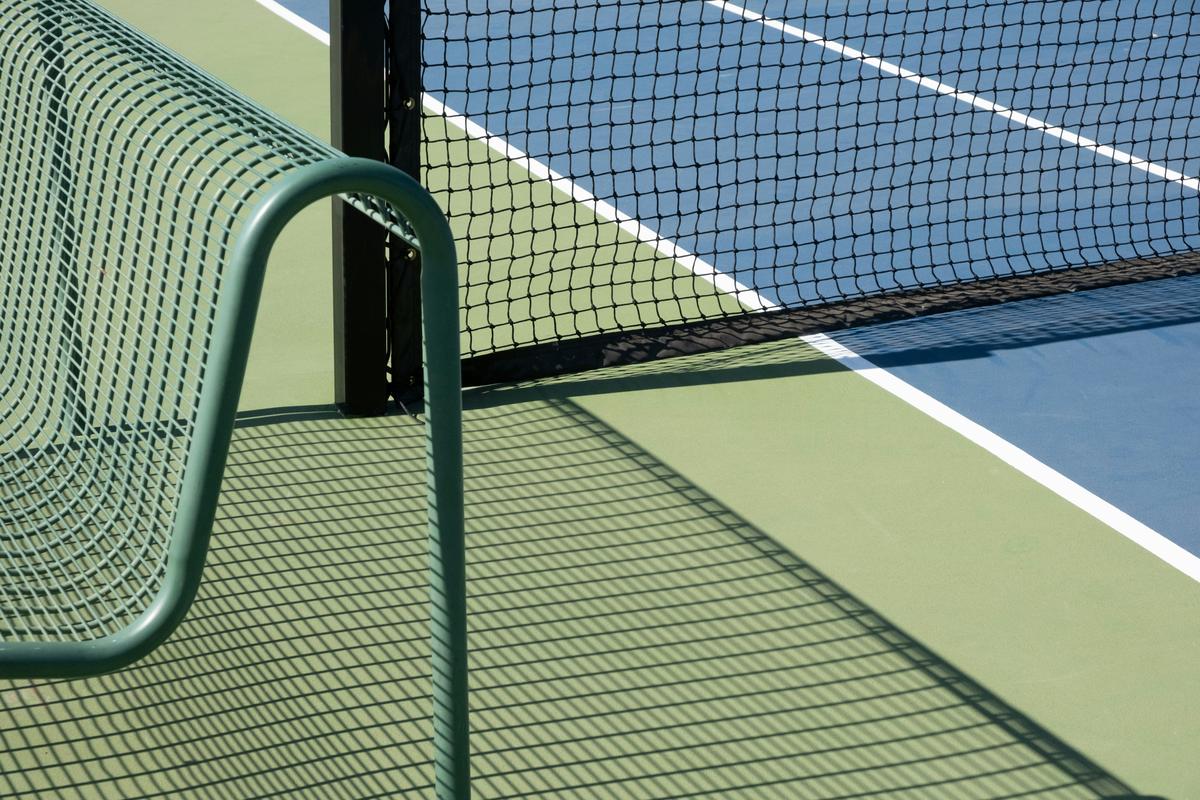
Every consumer guide on this subject gives you one measurement: 20 feet by 44 feet. It is correct. Rule 3.A.1 puts the court at 20 ft (6.10 m) wide by 44 ft (13.41 m) long, inclusive of lines, and it is the same rectangle for singles and doubles — no shrinking the court for singles the way tennis does.
It is also the wrong number to plan a facility around, and taking it at face value is how operators end up with courts that technically exist and functionally do not.
Rule 3.A.3 is the clause that matters to you, and it appears on none of the equipment guides currently ranking for this question. The minimum playing surface — the court plus the run-off around it that players actually use — is 30 ft (9.14 m) wide by 60 ft (18.29 m) long. The rulebook then recommends more than the minimum:
| Purpose | Width | Length |
|---|---|---|
| Absolute minimum playing surface | 30 ft (9.14 m) | 60 ft (18.29 m) |
| New construction | 34 ft (10.36 m) | 64 ft (19.5 m) |
| Tournament play | 34 ft (10.36 m) | 64 ft (19.5 m) |
| Stadium court | 50 ft (15.24 m) | 80 ft (24.38 m) |
Read the difference as a footprint and the consequence is obvious. The court is 880 square feet. The recommended new-construction surface is 2,176 square feet. If you sized a six-court build off the court dimension alone, you did not underestimate by a bit of run-off; you specified less than half the area the governing body recommends, and you will discover it when players start hitting the fence on a fourth shot.
Two more clauses worth putting in the tender
Rule 3.A.2 says court measurements must be made to the outside edge of the perimeter and non-volley zone lines. This sounds pedantic until a line contractor measures to the centre of a 2-inch line and hands you a court that is consistently two inches short in each direction.
Rule 3.A.4.e sets those lines at 2 inches (5.08 cm) wide, all the same colour, clearly contrasting with the playing surface. Rule 3.A.4.c fixes the non-volley zone at 7 ft (2.13 m) from the net on each side, spanning the full width between sidelines — and notes that the zone is two-dimensional and does not extend above the playing surface.
Court surfacing itself — the build-up, the acrylic system, the drainage falls — is a construction question rather than an equipment one, and it belongs with your court contractor rather than your equipment supplier. What belongs here is the footprint you hand that contractor.
The net system: the four numbers that decide whether a quoted net is regulation
Net height is the most-published specification in this sport and the least useful on its own. Every supplier's page carries 36 inches at the sidelines and 34 inches at the centre. Almost none carries the four figures that actually determine whether the system in the quotation is regulation, and a portable net can hit both heights perfectly while failing every one of them.
Here is the complete set, from Rules 3.B.1 through 3.B.7.
| Specification | Requirement | Clause |
|---|---|---|
| Post spacing | 22 ft (6.71 m) +/- 1.0 in, inside of post to inside of post | 3.B.2 |
| Post diameter | 3 in (7.62 cm) maximum | 3.B.2 |
| Net length | At least 21 ft 9 in (6.63 m), post to post | 3.B.3 |
| Net drop | At least 30 in (76.2 cm), bottom edge to top | 3.B.3 |
| Height at sidelines | 36 in +/- 0.25 in (91.44 cm +/- 0.635 cm) | 3.B.6 |
| Height at centre | 34 in +/- 0.25 in (86.36 cm +/- 0.635 cm) | 3.B.7 |
| Top edging | 2 in (5.08 cm) white tape binding over a cord or cable, resting on it | 3.B.4 |
| Mesh | Any mesh fabric that will not let a ball pass through | 3.B.1 |
The two to put in front of a supplier are net length and net drop. A 21 ft 9 in net between posts set 22 ft apart leaves roughly three inches of total slack, which is why a system quoted with an undersized net panel shows up as a sagging middle no amount of strap tension fixes. And the 30 in minimum drop is what stops a ball skidding under the net on an outdoor court that is not perfectly flat.
Portable versus permanent
None of the above changes between portable and permanent systems. The rulebook does not have a lenient tier for portables. What changes is how the system holds those numbers after six months of being dragged across a surface twice a day — frame stiffness, joint tolerance and how the centre strap anchors, since Rule 3.B.5 allows a strap centred 10 feet from the outside edge of the sidelines specifically so the centre height can be pulled back to 34 inches.
If you are comparing frames rather than fabric, the portable net system frame comparison covers the structural side, and the net height regulation spec sheet goes deeper on measurement and tolerance than this map needs to.
Balls: the compression number that matters and the indoor/outdoor myth
Start with the correction, because it changes what you stock. Rule 3.C.1 states that all approved balls are acceptable for indoor or outdoor play. There is no separate indoor approval and no separate outdoor approval. Figure 3-2 of the rulebook notes only that the larger-holed ball is customarily used indoors and the smaller-holed ball outdoors — a convention that reflects how the two behave in wind and on different surfaces, not a compliance boundary.
For a facility that means the indoor/outdoor decision is a playing-experience decision and a durability decision, not a regulatory one. You are not obliged to hold two approved inventories to stay legal. You may well choose to, and the indoor versus outdoor ball comparison sets out where each behaves better.
What the standard does fix is the measurable envelope, and this is where a spec sheet earns trust or loses it.
| Property | Requirement | Clause (ESM Rev 3.0) |
|---|---|---|
| Diameter | 2.87 in (7.29 cm) to 2.97 in (7.54 cm); out-of-round variance no greater than +/-0.020 in (0.51 mm) | 2.D.3 |
| Weight | 0.78 to 0.935 oz (22.1 to 26.5 g) | 2.D.4 |
| Bounce | 30 to 34 in (76.2 to 86.4 cm) when dropped from 78 in (198.1 cm) onto granite, at 70 °F +/- 5 °F | 2.D.5 |
| Compression | Average result under 43 LBF, per ASTM F1888-09; each ball tested twice | 2.D.6 |
| Holes | Minimum 26, maximum 40, circular | 2.D.8 |
| Hardness | 40 to 50 Durometer D — corollary data only, no longer a compliance requirement | 2.D.7 |
Two of those rows are worth arguing about with a supplier.
The compression limit is the real performance gate: under 43 LBF, averaged, tested in accordance with ASTM F1888-09, with each ball loaded twice — once perpendicular to the seam and once parallel to it, or at two points roughly 90 degrees apart on a seamless ball. It is a destructive-ish batch test, not something you verify by squeezing a sample.
The hardness row is the one that catches buyers out. Durometer 40 to 50 is still quoted on plenty of spec sheets as though passing it means something. The Equipment Standards Manual is explicit that it is recorded for corollary data only and is no longer a compliance requirement. A supplier leaning on a Durometer figure while going quiet about compression is telling you which test they ran.
Colour, and the one rule people misread
Rule 3.C.3 requires the ball to be one uniform colour except for identification markings, and says colours may vary. There is no approved-colour list, so the choice is a visibility decision against your surface and lighting rather than a compliance one — covered properly in the ball colour and visibility guide. Requirements for tournament play are set by the tournament, not by the colour of the ball you stock.
Paddles: no weight limit, a hard size limit, and a power ceiling that moved
The paddle rules contain the single most counter-intuitive fact in this entire equipment map, and buyers specifying a rental fleet routinely get it backwards.
Rule 3.D.3 is one sentence: there is no restriction on paddle weight. None. A 6.8-ounce paddle and a 9-ounce paddle are equally legal. Rule 3.D.2 adds that there is no restriction on paddle thickness either. What is capped is size: combined length and width, including edge guard and butt cap, must not exceed 24 in (60.96 cm), and length alone must not exceed 17 in (43.18 cm).
So the two properties buyers most often try to specify their way around — weight and thickness — are unregulated, while the geometry they rarely check is hard-limited. If you are building a rental fleet, weight is purely a playability and durability decision, which is the angle the rental paddle selection guide takes.
The surface tests, which are where approval is actually won or lost
The Equipment Standards Manual governs the paddle face far more tightly than the rulebook summary suggests, because the face is where spin and power are engineered.
- Roughness (ESM 2.E.2.a.1): average no greater than 30 micrometers on Rz readings and 40 micrometers on Rt, measured with a Starrett SR160 or SR300 tester or equivalent, six readings per face. No single data point may exceed 33 micrometers Rz or 44 micrometers Rt.
- Friction (ESM 2.E.2.a.2): maximum kinetic coefficient of friction of 0.1875, tested in accordance with ASTM D1894-14.
- Gloss (ESM 2.E.2.b): no measurement exceeding 80 GU on the face or the edge guard, at a 60-degree measurement angle.
- PBCoR (ESM 2.E.6.f): the Paddle/Ball Coefficient of Restitution ceiling was 0.44 from 1 November 2024, and was reduced to 0.43 effective 1 November 2025.
That last figure is the one to check dates against. PBCoR is the power ceiling introduced in Revision 3 of the manual, and a paddle certified under the 0.44 limit is not automatically inside the 0.43 limit now in force. If you are buying a multi-year fleet or a pro-shop range in 2026, the question to a supplier is not "is it approved" but "under which limit was it tested, and when".
Club branding runs into Rule 3.D.7: decals and tape must not extend more than 1.0 in (2.54 cm) above the top of the grip, nor more than 0.5 in (1.27 cm) inside the outer edge of the paddle — or inside the edge guard where one is fitted. Facility logos applied after purchase are constrained by the same clause that constrains the manufacturer.
The equipment nobody regulates but every session needs
Everything above this line has a clause number. Nothing below it does, and saying so plainly is more useful than pretending otherwise — because the absence of a standard is exactly why these line items vary most between quotations and why they are where margin hides.
Ball storage and transport
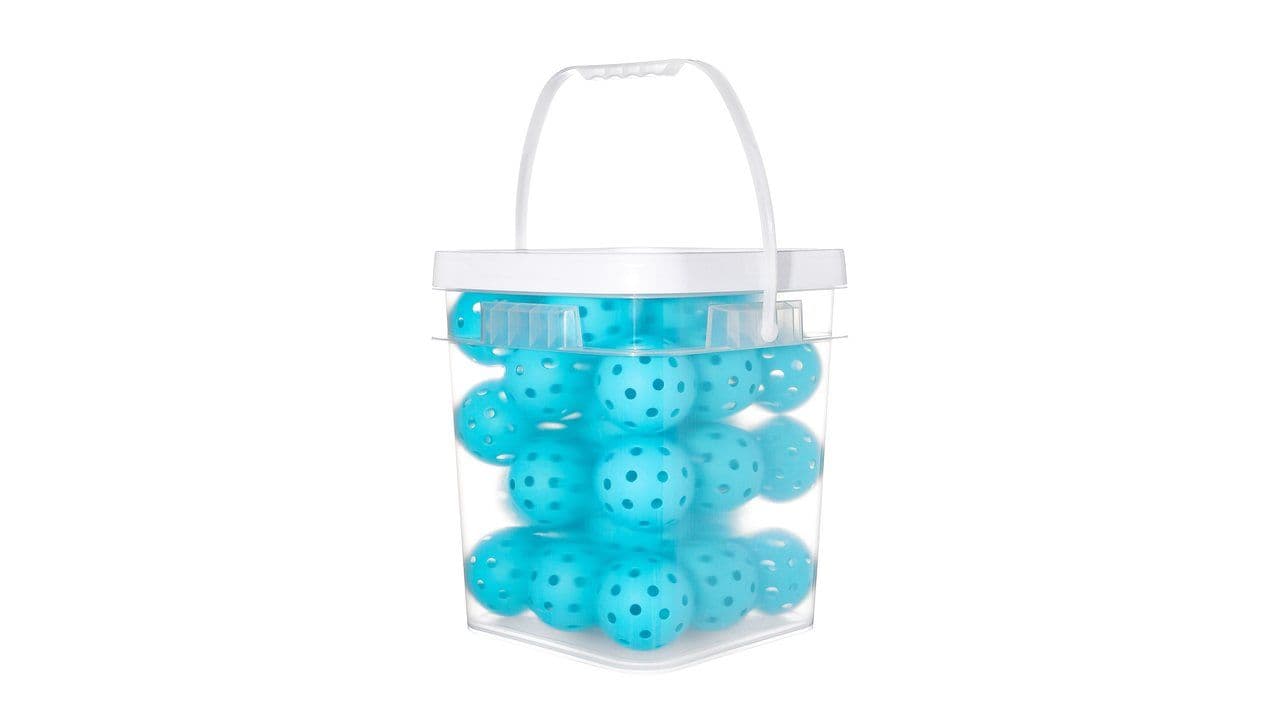
No rule mentions how balls get from a store cupboard to a court. In practice this becomes the daily bottleneck at any facility running back-to-back sessions, because loose balls are handled dozens of times a day and every handling step is staff time. The category to look at is bucket and hopper systems; the failure mode is almost always the lid or the handle rather than the container, which is the subject of the 36-pack bucket breakdown.
Line marking for converted and multi-use surfaces
Rule 3.A.4.e tells you lines must be 2 inches wide, one colour, clearly contrasting. It does not tell you how to achieve that on a gym floor that is also a basketball court on Tuesdays. Temporary tape and permanent paint are both compliant if the finished line meets the clause; the decision is about surface compatibility, removal and how many times a year staff will re-lay it.
Spares, treated as a category rather than an afterthought
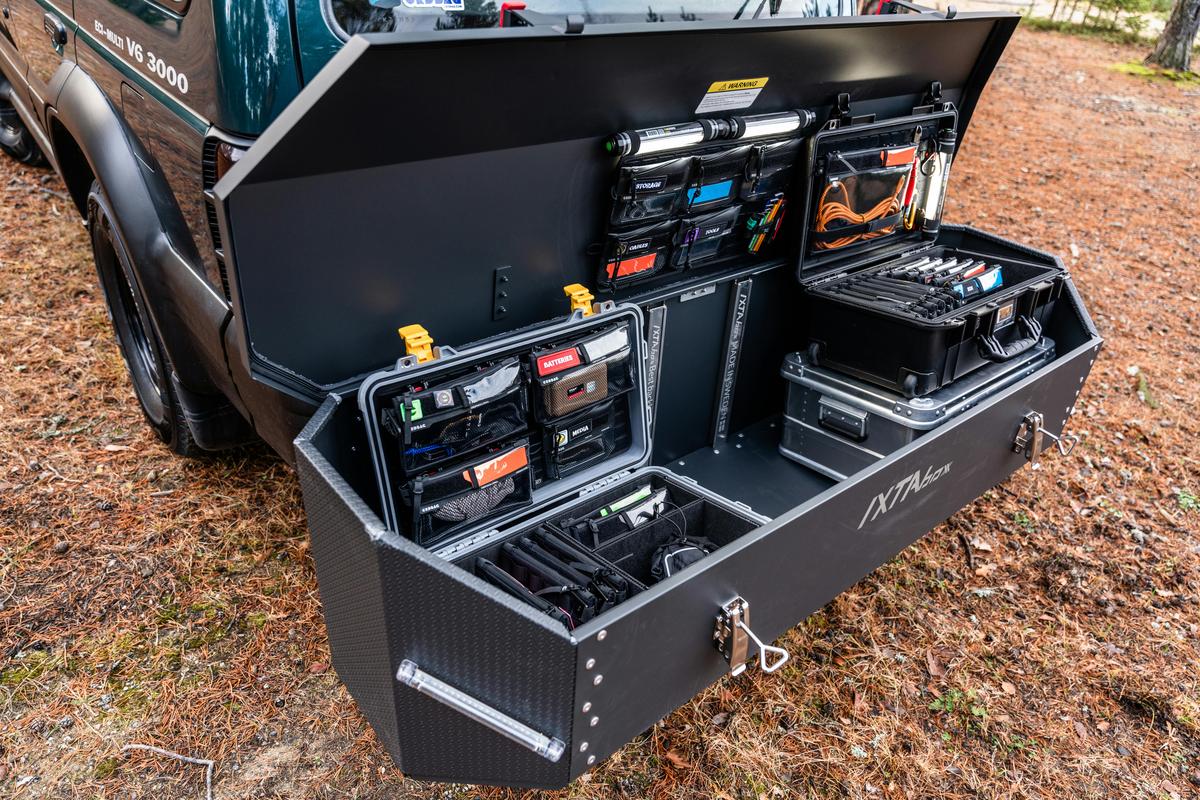
Net fabric, centre straps, replacement grips. None regulated, all consumable. The one clause-adjacent point worth carrying: because Rule 3.B.4 requires that 2-inch white top binding over a cord or cable, a net whose binding has failed is not merely tatty — it no longer meets the specification, so top-edge condition is a compliance item on a component with no compliance schedule.
Grip replacement is the highest-frequency consumable in any rental operation, and sizing it correctly across a mixed fleet is a genuine spec question rather than a taste one; the grip size guide covers the ranges.
How to check an approval claim before you sign the purchase order
"USAP approved" appears on a great many quotations. It is a checkable claim, it takes about a minute to check, and the checking is done on USA Pickleball's site rather than the supplier's.
Before the procedure, two scope corrections that save arguments later.
Approval governs sanctioned tournament play. The rulebook requires equipment used in a sanctioned tournament to be on the approved list. It does not impose a blanket legal requirement on every ball in a recreational facility's store cupboard. Whether you need approved equipment throughout depends on what you intend to host — and if you plan to host sanctioned play at any point, buying approved from the start is far cheaper than replacing a fleet. Requirements vary by event, sanctioning body and jurisdiction, so confirm the current position with the sanctioning organisation for anything competitive.
The list is the authority, not the seal. The Equipment Standards Manual is explicit that products may not be marketed as USA Pickleball Approved before testing is complete, and must be listed on the public database to be legal for sanctioned events — with no exception for pro prototypes or unreleased special editions.
The check itself
- Take the exact brand and model designation from the quotation. ESM 2.E.7 requires a clearly marked brand and model name or number, and requires a unique name or number where core material, surface material or other significant details differ — so "Pro Carbon 16mm" and "Pro Carbon 13mm" are separate entries, and a match on one does not cover the other.
- Look that designation up on the USA Pickleball approved equipment database and confirm it is listed as passing.
- For paddles bought in 2026, ask when it was tested and against which PBCoR limit — 0.44 applied from 1 November 2024, 0.43 from 1 November 2025.
- For balls, ask for the compression result against the under-43 LBF requirement rather than a Durometer figure.
- Confirm the model you are quoted is the model on the list, not a visually identical variant with a different core.
Then the part almost nobody prices in. Under ESM 2.F.1, approval of a specified model, brand, version or design may be revoked on 18 months' notice if the equipment is found to have been materially changed, or if it degrades under ordinary use so as to significantly alter the nature of the sport. ESM 2.F.2.a goes further: paddles must remain compliant with all requirements over their entire useful life, inclusive of any degradation to benefit.
For a facility that is a procurement risk with a clock on it. A five-year rental fleet bought today outlives an 18-month revocation notice comfortably, and "it was approved when we bought it" is not a position the rulebook recognises. It is a reasonable question to put to a supplier in writing: what happens to this order if the model's approval status changes.
One last practical note for anyone planning to host: under ESM 2.D.2 the Tournament Director chooses the tournament ball from the approved list. Stocking a ball your likely sanctioning body's directors do not select is a real risk to a competitive programme, and it is worth asking before committing to volume. The approved ball guide and the paddle approval check both go further into the lookup itself.
For club, facility and programme buyers stocking paddles and balls at wholesale volume — our catalogue pages carry the paddle and ball specifications in the same terms used above, so you can compare a line against the clause rather than against marketing copy. MOQ runs from 1,000 pcs on balls and 50 pcs on paddles. Nets, carts and court accessories are quoted separately and are not on the catalogue pages.
See the paddle and ball rangeWhy these specifications keep moving, and what that means for a fleet
Treat this page as a snapshot rather than a permanent reference, because the equipment standards behind it are unusually active for a governing-body specification.
The evidence is in the revision history. PBCoR did not exist as a compliance test before Revision 3 of the Equipment Standards Manual introduced it in January 2025; the same revision also extended specification coverage to paddle surface finish, gloss and shiny edge guards. The ceiling it introduced then tightened within twelve months, from 0.44 to 0.43. A specification that is created and then tightened inside a year is not a settled one.
The scale of the testing programme explains why. USA Pickleball's Equipment Evaluation Committee has been in place since 2016, working with laboratories hosted at Element U.S. Space and Defense, and the manual records that over 5,000 paddles and 400 balls have been tested since inception — data explicitly used to validate and improve the specifications themselves. In other words the standards are being revised against a growing evidence base, and the manual reserves the right to modify specifications through a notice-of-proposed-rulemaking process.
For a facility this converts into one procurement habit rather than a worry. Date-stamp your equipment records: which model, tested when, against which limit. A fleet whose paperwork records only "approved" cannot answer the question that matters when a specification moves, and reconstructing it two years later means chasing a supplier who may no longer sell that model. If you are committing to a multi-year fleet, it is also worth hearing how the standards are administered directly from the governing body rather than through a supplier's summary of them.
The trade-off, stated plainly
The strength of a rules-first equipment map is that everything in the mandatory tier is checkable by you, today, against a free published document — no supplier relationship required, no trust extended. The limitation is that the rulebook has nothing to say about the equipment your staff will handle most: it will not tell you how many paddles a court needs, how long a net lasts outdoors or which bucket lid survives a season, because no governing body regulates any of that.
The commercial terms split the same way. Specifications are settled and free to check; minimum order quantities are knowable in advance — 1,000 pieces on balls and 50 pieces on paddles is the honest floor for a factory-direct route, and the reason very small clubs are usually better served by a distributor. Price and lead time genuinely are not knowable in advance, because both move with specification, volume, branding, destination and whether a mould or a golden-sample approval sits in front of production. Ask for them against a defined specification and a defined quantity and both become answerable in one exchange.
So use the clauses to reject what fails and use operating experience for everything else.
Frequently Asked Questions
What equipment is genuinely mandatory to run pickleball at a facility?
A compliant playing surface, a regulation net system, approved-standard balls and paddles. Those four carry clause numbers in the 2026 rulebook. Storage, line-marking kit, carts and spares are operationally necessary but regulated by nothing.
How much space does one pickleball court actually need?
The court is 20 ft by 44 ft, but Rule 3.A.3 sets a minimum playing surface of 30 ft by 60 ft and recommends 34 ft by 64 ft for new construction. Plan the surface, not the court.
Do I need separate indoor and outdoor balls to stay compliant?
No. Rule 3.C.1 says all approved balls are acceptable for indoor or outdoor play. Larger holes indoors and smaller holes outdoors is convention, not an approval category. Choose on playing behaviour and durability instead.
Is there a weight limit on pickleball paddles?
There is no restriction on paddle weight, and none on thickness. Combined length and width is capped at 24 inches including edge guard and butt cap, and length at 17 inches.
What is PBCoR and does it affect what I buy in 2026?
PBCoR is the paddle power ceiling. It was 0.44 from 1 November 2024 and dropped to 0.43 from 1 November 2025. Ask a supplier when a paddle was tested and against which limit, not simply whether it is approved.
How do I verify a supplier's "USAP approved" claim?
Take the exact brand and model designation from the quotation and look it up on USA Pickleball's public approved equipment database. Marketing a product as approved before testing completes is prohibited, so the list is the authority.
Can USA Pickleball approval be withdrawn after I have bought a fleet?
Yes. Approval may be revoked on 18 months' notice, and paddles must stay compliant over their entire useful life. Ask in writing what a supplier does if a model's status changes mid-contract.
Want to source this quality for your brand?
Contact our factory directly on WhatsApp for an instant MOQ and pricing quote.